|
||||||||
|
Category: Electro
Rewind Review: Miss Red – Murder (2016)

I was listening to BBC 6 Music (arguably the best radio station on the planet) last week when I heard a fiery MC with wicked flow, an accent I couldn’t place, and a killer dub/dancehall beat behind her. I immediately opened my Shazam app and discovered I was listening to Tel Aviv’s Miss Red, teamed up with Kevin “The Bug” Martin. I searched for more than the track I was hearing, and I found her mixtape – Murder.
Martin provides the weird 16-bit video game-like beats to open the mixtape with “Mad,” and Miss Red is chanting and singing right away with no fear whatsoever as Martin’s beats expand to near-madness levels, almost drowning out Miss Red’s voice. The title track follows, and it’s a stunner. If it doesn’t hook you right away, something is wrong with you. Seriously, get to a doctor, because Red’s squeaky reggae-loving flow is arousing (i.e., “Everywhere I go, the cool get hotter.”).
“No Guns” starts off with horror movie synths before unleashing beats thicker than Leatherface. The contrast with Red’s reverb-layered rapping is lovely and shocking at the same time. Martin takes his beats and synths straight into industrial territory on “What Would You Like” while Red sings about sex hot enough to match Martin’s beats.
“Rollercoaster” builds like the machine of its title creeping up the first hill toward a possibly terrifying plunge, but it leaves you stuck at the top in time for “Ganja Man” to come along and either relax you while you’re at the top of the hill or make you more paranoid. I’m not sure which. Martin’s beats are a bit “bad trip,” but Red’s vocals are like a scalp massage. “Sugar” might be about drugs or, to be frank, the taste of Red’s…kisses. Yeah, let’s go with that. One thing’s for certain, I’ll go with Martin’s beats all day long on this track. They’re thick as sorghum and slippery as butter cream icing.
“Lean Back” starts with an air raid siren that morphs into Red’s hypnotizing vocals as she encourages us to relax, listen to good music, and put aside our differences. Don’t worry, she doesn’t suggest we give up partying or standing up against the Man, because the next song is called “Trash It.” Martin’s beats sound like distorted rubber bands and Red’s rhymes grow like the She-Hulk. “Fever” begins with a shimmering harp notes until Martin’s Donkey Kong-stomp beats unload on you. Red’s vocals swirl around you like smoky ghosts.
Martin keeps surprising you with his loud bursts of synths and beats on “Pull It Up” while Red squeaks, chants, and rhymes in praise of her selector (That’s a Jamaican term for DJ, in case you didn’t know). Microphone feedback is used as percussion in “Leggo,” and Red stage whispers her creepiest vocals on the album.
The opening of “1 Dog Shot” sounds like a particularly grating alarm clock. Trust me, you’ll appreciate the wake-up call because Red bursts into the track like she’s crashing through a window on a rope while firing an Uzi. The beginning of the last track, “Come Down,” almost sounds like a dog barking in a far-off room, and I’m sure that’s no coincidence. Martin’s beats sound like a pressure cooker ticking off steam and Red hopes that someone will come down and pick her up, perhaps from her blues, perhaps from this plane of existence, or perhaps from the local club for a nightcap. It fades out quick, so it seems she got her wish.
Murder is hard to describe because it sounds like dancehall, but it also sounds like industrial madness, dubstep trip-outs, and psychedelic dream wave. In other words, it sounds like something you need to hear right now. Miss Red’s first album, K.O., is out this July and is already high on my list as something I need to snag as soon as it’s available.
As if Murder wasn’t good enough, Miss Red offers it for free download through her website and her Bandcamp page. You can’t miss.
Keep your mind open.
Rewind Review: Caribou – Swim (2010)

Canadian DJ, producer, and mathematician Dan Snaith, otherwise known as Caribou, released Swim in 2010, and I’m not sure how I missed it. I actually hadn’t heard of him until he was slated to perform at the cancelled Levitation Music Festival in 2016. I had hoped to catch his set there, as I was impressed with the few songs I heard while researching him ahead of the festival, but Mother Nature had other plans.
So, I put him on a list of bands and artists whose discographies I need to explore deeper, and I finally got around to picking up a copy of this album. I don’t know why I waited two years, because Swim is excellent.
Starting with the hip and groovy “Odessa,” Snaith punctuates dance floor bass with strange bird cry-like sounds while he sings about a woman striking out on her own. “Sun” (the only lyric in the song, repeated over and over) bounces, thumps, and glistens with house beats and shining synths. The synths on “Kaili” are a bit distorted, but it works for the building tension of the song (which seems to be about another woman in Snaith’s life, this one dealing with illness and possibly approaching death).
“Found Out” is full of quirky beats and synths that sound like doors being slammed in a video game (and the jingle bells are a great touch). “Bowls” is lush with its slightly Asian bells, strings, and synths. I’m not sure if the title of “Leave House” means Snaith wanted to leave house music behind and explore other genres of electronica in 2010, but it wouldn’t surprise me if that’s the case. He explores many avenues on Swim, so it makes sense that he constantly wants to expand his boundaries and skill set. It reminds me a bit of Alan Parsons Project tunes with Snaith’s vocal work and the synth bass.
The album mellows out with the last three tracks. “Hannibal” and “Lalibela” are almost dream-house, and “Lalibela” is especially trippy with Snaith’s reverberated vocals. “Jamelia” is sci-fi lounge jazz mixed with warped house beats, almost like a space station night club is keeping the beats going while the station wobbles in orbit.
Snaith has plenty of other material out there, and Swim is intriguing enough to make me want to seek out more of his work. It might intrigue you as well.
Keep your mind open.
[Swim over to the subscription box and drop in your e-mail address, won’t you?]
Steve Davit – Off / On

Multi-instrumentalist, producer, and dream warrior Steve Davit has released his first EP of solo instrumentals, Off / On, and it might be your favorite new acid jazz record.
Beginning with the so-funky-you-can-barely-stand-it “Forward,” the album instantly makes you feel like you’re in a re-creation of a 1930’s jazz club on a space station in the next century. “Coniferous” starts with a ping-pong beat before Davit’s baritone saxophone and new wave synths add layers of intrigue.
I know Steve Davit and I have a mutual love for Morphine, and I can’t help but think Dana Colley’s saxophone work inspired some of Davit’s on “Philly Sophia” – which hits you like an expert boxing combination (set-up…delivery). “Wanna Dance” is smooth jazz mixed with quirky beats that almost make it sound like it’s moving forward and backward in time. The closer, “Night Song,” has synth-vibes and is perfect for walking out of a dive bar at 3am in hopes of finding a late night pizza slice and someone to cook brunch for in a few hours. It feel melancholy at first, but ends up being sweetly hopeful.
Davit’s currently on tour with Marian Hill, and he told me during my interview with him that he’ll have copies of Off / On for sale at shows. Grab a copy there or through his website. You need his grooves more than you probably realize.
Keep your mind open.
[Subscribe and I’ll forward updates straight your e-mail inbox.]
Levitation Austin artist spotlight: Pow!

Synth-punk weirdos POW! are playing Levitation Austin at Barracuda on April 29th at 10:50pm. It’s a sold-out show at with them opening for Oh Sees. They pay a quirky, catchy brand of electro-rock that I think will be a treat live. I hope you can make it.
Keep your mind open.
[Don’t forget to subscribe before you split.]
Levitation Austin artist spotlight: Dan Deacon

Electronic musician / DJ / avant-garde artist Dan Deacon will be closing one of the Empire garage sets at Levitation Austin (April 28th at midnight) this year. His shows are apparently wild affairs with audience participation. His videos are weird enough, so a live set from him should be a good time if it’s as odd as they are.
Keep your mind open.
[Subscribe! You can do it!]
Levitation Austin artist spotlight: S U R V I V E

Another Austin band that will be melting minds at Levitation Austin this year is SURVIVE. They play a cool, creepy style of synthwave that pays great homage to John Carpenter and they’re well known for their work on the Stranger Things soundtrack. They’ll play the second set at Stubb’s BBQ on April 28th starting around 9pm. This will be the show to see if you’re in the mood for something spooky at the festival.
Keep your mind open.
[How can you survive without music updates? Subscribe and lose your worries.]
DJ Koze’s newest single, “Pick Up,” is your new favorite summer song two months before summer gets here.
DJ Koze Shares New Single “Pick up”
Listen Hereknock knock Out May 4th On Pampa Records
Listen Hereknock knock Out May 4th On Pampa Records

[Photo by Gepa Hinrichsen]
DJ Koze recently announced the release of his new album, knock knock, out May 4th via Pampa Records. Along with the announcement he shared first single “Seeing Aliens” and followed up with “Illumination” featuring the ever-unique Róisín Murphy. Today he’s sharing the final single to be taken from the album in the form of the rolling, infectious dancefloor filler “Pick up.” Of the albums varied and intriguing array of tracks, “Pick up” is the most immediate, a track that instantly gets under the skin and becomes more satisfyingly joyful with each passing minute.
Listen To DJ Koze’s “Pick up”:
https://youtu.be/JE63vMzb3UE
https://youtu.be/JE63vMzb3UE
Like all DJ Koze records, knock knock exists outside of trend and influence. In fact, Knock Knock is a step further beyond: absolutely every single thing here, from grooves to voices to handclaps, is otherworldly and unique. Which is not to say it is utter alien abstraction. There is still disco, there is still soul, there is still techno, there is still hip hop, there is still psychedelia – there are even wafts of easy listening and lost crackly thrift store record memories – but though it may sound familiar, it never does what your brain thinks it’s going to do.And that’s what is crucial here. Koze is a world-maker, knock knock is far and away his greatest statement of that. You don’t get to choose how you hear his music – you enter his world or you don’t, that’s it. knock knock is an album that came together slowly and steadily, his working processes arcane and mysterious in their steady accumulation of sound and inspiration. It’s so complete and bursting with detail and consistency in every way that you’d swear it was meticulously planned (but there was no master plan) to create a definitive artifact: the record itself decided when it was ready. And now it is ready, the most perfectly constructed portal into that other world, you had better be ready too!
Listen:
“Pick up” – https://youtu.be/JE63vMzb3UE
“Illumination” feat. Róisín Murphy – https://soundcloud.com/
“Seeing Aliens” – https://soundcloud.com/
“Pick up” – https://youtu.be/JE63vMzb3UE
“Illumination” feat. Róisín Murphy – https://soundcloud.com/
“Seeing Aliens” – https://soundcloud.com/

[Knock Knock artwork]
Pre-order knock knock:
http://www.pamparecords.com/
*Very Limited Box Edition availableDJ Koze Online:
https://www.facebook.com/
http://www.pamparecords.com/
https://soundcloud.com/
http://www.pamparecords.com/
*Very Limited Box Edition availableDJ Koze Online:
https://www.facebook.com/
http://www.pamparecords.com/
https://soundcloud.com/
Keep your mind open.
[Pick up all the updates your want by subscribing.]
Makeness – Loud Patterns
 Kyle Molleson, otherwise known as Makeness, has given us a record that sounds like meticulous electronica and yet moves like free-flowing dance tracks at the same time – Loud Patterns.
The title track opens the record, bringing to mind a jungle DJ putting down tracks at a party in the House on Haunted Hill. “Fire Behind the Two Louis” is as slick and hot as a grease fire. “Who Am I to Follow Love” has lovely female vocals behind Molleson’s drums and sounds that make for good lounge slow jams.
“Stepping Out of Sync” has fat bass and more lounge synths combining for one of the best cuts on the record. “Gold Star” is another choice cut, with big synths and floor-shaking dance beats throughout it. I don’t know if the bass in “The Bass Rock” refers to fish or low-end sounds. I’m guessing the former because the bass grooves on it are somewhat subdued.
“Day Old Death” is a bit creepy, as you’d expect from such a title. I like the metronome-like beat in it to remind you of some masked killer stalking you. The building synth-bass of “Rough Moss” has a great payoff. It might be the most danceable song on the record. “Our Embrace” is as jubilant as you hope it would be with such a title. The synths are bright and bouncy and the drums keep you moving. The bass on “14 Drops” is so fat that it needs to go on a diet. The album ends with the appropriately titled “Motorcycle Idling,” because that’s just what it sounds like for a little over three minutes.
Loud Patterns is indeed both loud and full of wicked beat patterns. It bodes well for Makeness’ future, and for your next party.
Keep your mind open.
[Step over to the subscription box before you go.]
Makeness shares new single from upcoming album – “Loud Patterns”
Makeness Shares New Single “Who Am I To Follow Love”
https://youtu.be/4Utof_SCsW8
https://youtu.be/4Utof_SCsW8
Loud Patterns Out April 6th On Secretly Canadian
https://makeness.lnk.to/
North American Tour With Unknown Mortal Orchestra Starts This Month
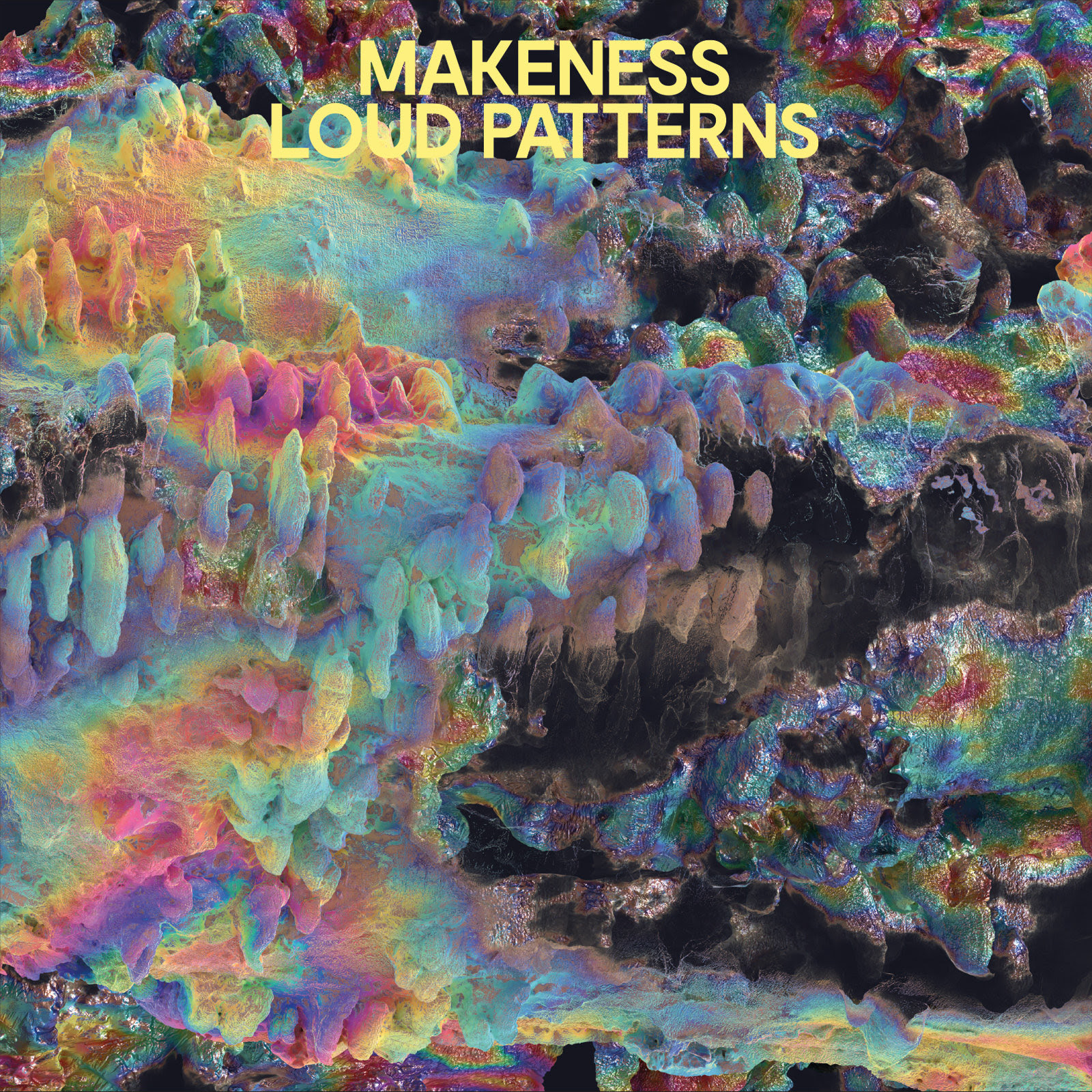
[Loud Patterns artwork]
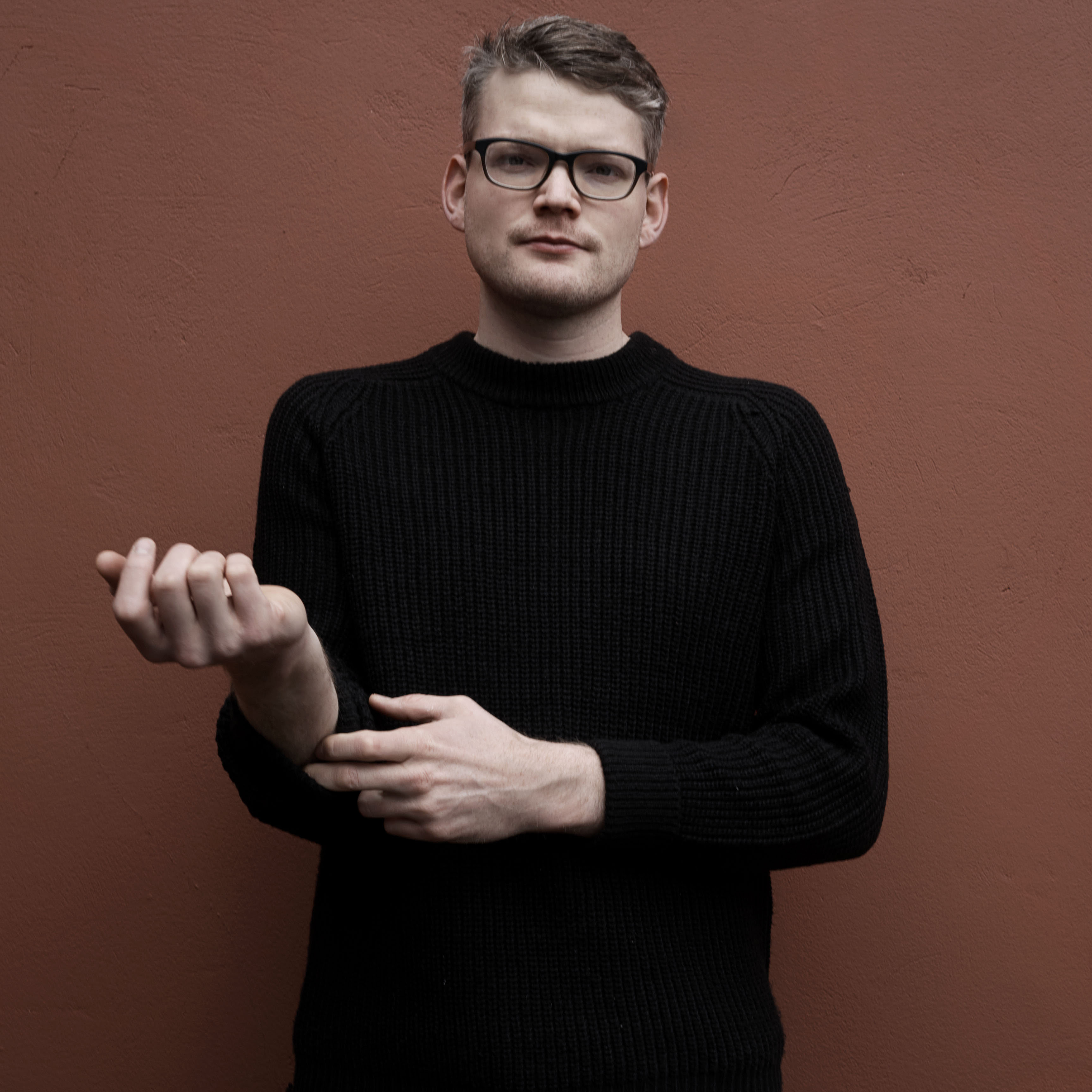
Scottish producer Makeness has shared another new single from his debut album, Loud Patterns, coming out this Friday, April 6th via Secretly Canadian. Crafting tracks which make a virtue of disparate influences, the sparkling “Who Am I To Follow Love” sees Kyle Molleson team up with Babeheaven vocalist Nancy Andersen to create a reflective mood and showcase another side to his versatile songwriting talents. The track is accompanied by a new webpage designed by Kyle, featuring a collection of images documenting the making of Loud Patterns.
Loud Patterns is an album that’s noticeably indebted to house and techno; there are 4/4 rhythms, and a no-nonsense directness that harks back to the Detroit pioneers. Channeling avant-garde experimentalism and an outsider’s interest in pop, Kyle embraces the distance between those two poles. The album arrives after a series of releases that have established his particular, in-between approach to dance-minded music. He put out two EPs on Manchester-based imprint Handsome Dad, a one-off single with Adult Jazz and the self-released Temple Works EP; Whities also released a limited-edition white label of a Minor Science dub of one of his tracks.
Following the release of Loud Patterns, Makeness will tour with label kin Unknown Mortal Orchestraacross North America and parts of Europe.
Listen To Makeness’ “Who Am I To Follow Love”:
https://youtu.be/4Utof_SCsW8
https://youtu.be/4Utof_SCsW8
Watch & Listen:
“Stepping Out Of Sync” video – https://youtu.be/_SaXuy2isS0
“Day Old Death” video – https://youtu.be/m6n5q58560M
“Day Old Death” stream – https://makeness.lnk.to/
“Loud Patterns” stream – https://youtu.be/RZF0rp1Ujbc
“Stepping Out Of Sync” video – https://youtu.be/_SaXuy2isS0
“Day Old Death” video – https://youtu.be/m6n5q58560M
“Day Old Death” stream – https://makeness.lnk.to/
“Loud Patterns” stream – https://youtu.be/RZF0rp1Ujbc
Makeness Tour Dates:
April 12 – @ London, UK @ Corsica Studios
April 22 – Northampton, MA @ Pearl Street w/ Unknown Mortal Orchestra
April 23 – Portland, ME @ Port City Music Hall w/ Unknown Mortal Orchestra
April 25 – Brooklyn, NY @ Brooklyn Steel w/ Unknown Mortal Orchestra
April 26 – Brooklyn, NY @ Brooklyn Steel w/ Unknown Mortal Orchestra
April 27 – Washington, DC @ 9:30 Club w/ Unknown Mortal Orchestra
April 28 – Philadelphia, PA @ Union Transfer w/ Unknown Mortal Orchestra
April 30 – Boston, MA @ Royale w/ Unknown Mortal Orchestra
May 1 – Montreal, QC @ Corona Theatre w/ Unknown Mortal Orchestra
May 2 – Toronto, ON @ Danforth Music Hall w/ Unknown Mortal Orchestra
May 3 – Chicago, IL @ Vic Theatre w/ Unknown Mortal Orchestra
May 4 – Minneapolis, MN @ First Avenue w/ Unknown Mortal Orchestra
May 7 – Seattle, WA @ The Moore Theatre w/ Unknown Mortal Orchestra
May 8 – Vancouver, BC @ Commodore Ballroom w/ Unknown Mortal Orchestra
May 9 – Portland, OR @ Roseland Theater w/ Unknown Mortal Orchestra
May 10 – Oakland, CA @ Fox Theater w/ Unknown Mortal Orchestra
May 11 – Los Angeles, CA @ The Wiltern w/ Unknown Mortal Orchestra
May 12 – Pioneertown, CA @ Pappy and Harriet’s w/ Unknown Mortal Orchestra
May 18 – Hamburg, Germany @ Uebel & Gefährlich w/ Unknown Mortal Orchestra
May 19 – Berlin, Germany @ Kesselhaus w/ Unknown Mortal Orchestra
May 20 – Heidelberg, Germany @ Karlstorbahnhof w/ Unknown Mortal Orchestra
May 21 – Düsseldorf, Germany @ zakk w/ Unknown Mortal Orchestra
May 22 – Paris, France @ La Gaîté Lyrique w/ Unknown Mortal Orchestra
May 24 – London, United Kingdom @ Roundhouse w/ Unknown Mortal Orchestra
May 25 – Bristol, United Kingdom @ SWX w/ Unknown Mortal Orchestra
May 31 – Edinburgh, United Kingdom @ Hidden Door
September 1 – Dumfries & Galloway, United Kingdom @ Drumlanrig Castle (Electric Fields Festival)
April 12 – @ London, UK @ Corsica Studios
April 22 – Northampton, MA @ Pearl Street w/ Unknown Mortal Orchestra
April 23 – Portland, ME @ Port City Music Hall w/ Unknown Mortal Orchestra
April 25 – Brooklyn, NY @ Brooklyn Steel w/ Unknown Mortal Orchestra
April 26 – Brooklyn, NY @ Brooklyn Steel w/ Unknown Mortal Orchestra
April 27 – Washington, DC @ 9:30 Club w/ Unknown Mortal Orchestra
April 28 – Philadelphia, PA @ Union Transfer w/ Unknown Mortal Orchestra
April 30 – Boston, MA @ Royale w/ Unknown Mortal Orchestra
May 1 – Montreal, QC @ Corona Theatre w/ Unknown Mortal Orchestra
May 2 – Toronto, ON @ Danforth Music Hall w/ Unknown Mortal Orchestra
May 3 – Chicago, IL @ Vic Theatre w/ Unknown Mortal Orchestra
May 4 – Minneapolis, MN @ First Avenue w/ Unknown Mortal Orchestra
May 7 – Seattle, WA @ The Moore Theatre w/ Unknown Mortal Orchestra
May 8 – Vancouver, BC @ Commodore Ballroom w/ Unknown Mortal Orchestra
May 9 – Portland, OR @ Roseland Theater w/ Unknown Mortal Orchestra
May 10 – Oakland, CA @ Fox Theater w/ Unknown Mortal Orchestra
May 11 – Los Angeles, CA @ The Wiltern w/ Unknown Mortal Orchestra
May 12 – Pioneertown, CA @ Pappy and Harriet’s w/ Unknown Mortal Orchestra
May 18 – Hamburg, Germany @ Uebel & Gefährlich w/ Unknown Mortal Orchestra
May 19 – Berlin, Germany @ Kesselhaus w/ Unknown Mortal Orchestra
May 20 – Heidelberg, Germany @ Karlstorbahnhof w/ Unknown Mortal Orchestra
May 21 – Düsseldorf, Germany @ zakk w/ Unknown Mortal Orchestra
May 22 – Paris, France @ La Gaîté Lyrique w/ Unknown Mortal Orchestra
May 24 – London, United Kingdom @ Roundhouse w/ Unknown Mortal Orchestra
May 25 – Bristol, United Kingdom @ SWX w/ Unknown Mortal Orchestra
May 31 – Edinburgh, United Kingdom @ Hidden Door
September 1 – Dumfries & Galloway, United Kingdom @ Drumlanrig Castle (Electric Fields Festival)
[Photo by Dexter Lander]
Pre-order Loud Patterns – https://makeness.lnk.to/
Keep your mind open.
[Get loud by subscribing.]