Composed of Irish duo DJs Ian Ball and David “Not the Talking Heads guy” Byrne, The Dirtbirdz are launching the WYTE LBL label with their powerful Warcrimes EP.
Starting with the bumping, thumping, and slightly terrifying “Death March,” the duo mix one of Rudyard Kipling‘s most famous poems (“Boots”) with swirling synths and thudding bass and drums to excellent effect. “Air Raid” uses synths to mimic sirens. “Surgical Strike” has a relentless beat that feels like it’s broken up now and then with synth pulses, but it really isn’t.
The drums of “Extraction” are pure jungle beats with sizzling hi-hat and slick vocal sounds added in for good measure. The EP ends with the peppy, hypnotic “Retrograde” to keep you dancing until the sudden fade out that’s like the sun coming up over the horizon as you wrap up the rooftop party.
Take a jazz guitarist (Diego Barber) and a jazz percussionist (Alejandro Coello) who have had a long interest in electronic music, put them in the guitarist’s home studio, let them go nuts, and you get MAMBEC and their first EP 846 KM2.
The EP is four tracks of cool as ice electro and house music. “MBC 21” calls for us to “dance all night and dance all day.” I mean, what better response in this batshit crazy world right now? The bumping beats and skronky synths sure help. “MBC 24” starts off with hi-hat work so sizzling that it sounds like Coello might be frying eggs on it. Then come the symphonic synths to make the track sound like a mysterious scene in a sci-fi film.
“MBC 25” continues the sci-fi thrills, bumping up the beats per minute in case you need a chase scene, and the use of vocals on it would make Moby envious. Finally, “MBC 26” ends the EP with thumping bass to keep your hips moving while metallic industrial sounds create a weird, funky beat mix to keep your attention.
It’s a solid EP, making you wonder, “Where are MBC 1-20? And 22 and 23?” You’ll want them all.
I, for one, did not have “krautrock-psych banjo record” on my bingo list this year. Nor did I expect such a record to be one of the best records I’ve heard in 2026 so far.
Allison de Groot (an award-winning clawhammer banjo player) and Rich Ruth’s (a. multi-instrumentalist and producer of minimalist, ambient, and synthwave) self-titled album is lovely, trippy, and mesmerizing. As the story goes, Ruth was going to produce a solo album for de Groot, but the two of them began composing together not long after the recording process started.
Lead single and track “Nervion” immediately lets you know this won’t be a folk record or a bluegrass record. It’s something otherworldly. Heck, “New Intervention” could be an alien transmission for all I know. de Groot’s banjo often sounds like a harp while Ruth creates soundscapes around her like what a robot farmer might listen to upon booting up and drinking a hot cup of machine oil before tending to the chickens. “Bass Crust” and “10-14” have some traditional banjo work in them, but also lots of weird synth sounds and motorik beats (and screams?) to increase the fascination.
Birdsong blends with banjo on “Distance from Then” for the first minute or so and then the tracks expands (blooms?) into a floating, sometimes playful ambient track that shifts your perception. “Sorgin” is straight-up synthwave, and I’m all here for it. You’ll hear de Groot “shredding” on “Rocks from the Moon” as he puts down a hypnotic rhythm and Ruth’s synths and guitar become swirling mist around her.
The closing track, “A Wizard and a Stork,” not only has the coolest name of all the tracks (It sounds like something The Sword might have come up with one night while playing D&D.), it also has the most expansive sound on the album. It grows with each chord, emerging like a sunrise.
It’s a fascinating record and one that I’ll probably give to at least a couple people for Christmas this year. Don’t miss it.
The cover of Yard Act‘s excellent third album, You’re Gonna Need a Little Music, pictures a piano about to fall on vocalist James Smith. As the story goes, a piano passed down to Smith by his late aunt was a crucial instrument while making the record. Smith and his bandmates are about to be crushed by the weight of a previous generation, or by expectations of fans and critics, or the music industry, or all of those things. You’re Gonna Need a Little Music is the first album, believe it or not, Yard Act have made while all being in a dedicated space together. The first two albums were made as individual parts in home studios or here and there while touring. Now, the band has fully gelled and it shows in every track.
“Empty Pledges” (with Smith’s aunt’s piano prominently playing) could be a rallying call for all of us to look away from our screens and turn off the news cycle – both of which ultimately provide us with nothing. Jay Russell‘s drum groove on “New Beginnings” is outstanding, as is the Zen message of “Purge yourself of sin, resist the urge to grin, spend your winnings on new beginnings. Breathe deep and take it in.”
“Tall Tales” takes on capitalism (one of Yard Act’s favorite subjects) with heavy-hitting lyrics like “Moral bankruptcy reigns supreme in the American dream.” “Fiction” has a slick bass groove from Ryan Needham that might make you slip on the sidewalk as you listen to it. The title track is also downright groovy.
Samuel Shipstone‘s guitar “Cherophobe Rock” is crunchier than that almond butter you put on your afternoon snack today. “Thrill of the Chase” has Smith pulling no punches whatsoever as he takes down egotists, liars, and anyone who gets in his way while Russell goes bonkers on his kit. “Janey Said” is a tale of Smith meeting an old flame in Berlin and realizing he isn’t sure if he wants love, life, or a career and she tells him he’ll hurt someone no matter what he chooses.
“Redeemer” is thick with sludge and grime as Smith muses on his inner rage and how he wants to express and understand it. He confronts aging on “Talky Talky People” (“When I was young, I was totally wired. Now I’m getting on, I’m only tired.”) and changes up his vocal delivery to Edwyn Collins-like smoothness, and the band ends the album with a great breakdown that would almost be a doom metal ham were it not for the Wild West saloon piano playing with it.
You’re Gonna Need a Little Music is a great title for an excellent record. Sometimes you need music to push through on a bad day, or to give you a boost for your workout, or just to shut out the rest of the damn noise, and Yard Act are happy to give it to you so hard that it will feel like you’ve been hit with a piano.
Keep your mind open.
[Get a little more music (news and reviews) by subscribing.]
Hailing from Ukraine, Nana Koloda and Sayhelooo (AKA Dymtro Snizhko) bring a neat approach to electronic dance music. Koloda is a dancer, DJ, and composer who approaches EDM with the mind of a performer. Sayhelooo is a composer and producer who specializes in music for film, commercials, and other media. The two of them combine their super powers to create an uplifting EP appropriately titled Lift Him Up.
You’re know you’re in for a good time with the first bass beats of the opening title track. The gospel choir chorus and the bumping synths practically levitate you to the dance floor. The extended mix of it is just as good, stretching out your sweaty dance session a bit longer.
The remaining three songs on the EP are also extended mixes. First up is “Krakatoa,” named after the infamous volcano. It bubbles and flows like lava until Koloda says, “The eruption is coming. Proceed to the dance floor.” and alarm klaxons sound. The song then slowly builds, keeping you waiting for the explosion. “Zozulia” sounds like a lost trance classic, and “Gandara” is thick with bass and wicked beats.
It’s a solid EP from a duo who are probably going to do a lot more sharp work. Get on board now and say you were there for the beginning.
The cover of Holy Wave‘s new album, i’m DADA, flat-out tells us “This is gonna be magical.” #Accurate
Recorded with their pals Lorelle Meets the Obsolete (with whom they’d also collaborated on their excellent album Five of Cups) and Joo Joo Ashworth of Froth, Holy Wave headed into the desert to not only record, but also to dive into heady subjects like fatherhood, finding and losing love, being present in an age where everything is grabbing for your attention, and, as you can guess by the album cover, art and its place in a world where programs that claim to make art “accessible” just make it cheaper and soulless.
“US 54” refers to a highway that cuts diagonally through New Mexico’s southwest corner and sets the album, band, and us on a journey that you know if going to open up some philosophical stuff. The cheekily named “s33.u.in./HAL” has wild, fuzzy guitars and slightly creepy samples while they look for meaning in caveman diets, self-help video streams, and other stuff that they secretly know is meaningless.
The bass groove of “happy song” lets you know it might not be all that happy, and then you hear the grumpy hornets-like guitars and think, “Yeah, maybe this title is ironic.” The keyboards and synths on “first DAE” are bright, shiny, and fun while the lyrics speak of chastising oneself for not figuring out something in a relationship that might not even be your fault (“No ‘How do you do’s?’, no ‘I love you’s.'”).
“lull” draws you in with its muted vocals and intriguing sounds, and soon you’re in a trance with the whole band. The title track is a trippy one, often sounding like it’s melting in the New Mexico sun. Dadaists loved deconstructing and reconstructing art forms, and the track (and album) sounds like something they took apart, put back together, and created a new thing. “unison” is another good example. Weird, space age synths mix with tight drumming, what might be an accordion or harmonium, and vocals sung through an inter-dimensional mirror. “too one” is what you hear when you walk through that inter-dimensional mirror.
“to other” is a synth bliss-out as you float through the new dimension Holy Wave have created. They’ve taken chords and sounds and stretched, shaped, and soothed them into something you’re not sure you can describe (again, like Dadaist art). The album ends with “dewey’s dirge,” a song that begins with “So long, farewell, goodbye…” and the band turning up the volume, echo, and fuzz instead of going out on a mellow note.
When I interviewed Holy Wave back in May of this year, they told me they almost called the album Art Department since they all have different forms of art they enjoy and create outside of music ranging from film to food. They love collaborating and how such team-ups help everyone create something they and we didn’t expect.
Originally released in 2006, the new reissue of Motörhead‘s Kiss of Death is here for its 20th anniversary and includes a lot of great extras.
The album gets off to a fast start (of course) with “Sucker,” and Mikkey Dee getting you moving with his fast, sharp beats. The firearms pictured on the album’s cover fit right in with the hard and heavy “Trigger” (which has a great breakdown in it) and “Under the Gun.”
“Listen to the hundred million dead. They didn’t know it, but they died for you,” Lemmy Kilmister sings / roars on the excellent “Sword of Glory” (which features a soaring solo from Phil Campbell). “If all that slaughter doesn’t make you sad, you’ll just make the same mistake again and again,” Kilmister warns. It hits hard, like everything Motörhead does.
Speaking of hitting hard, Kilmister’s bass on “Be My Baby” sounds like an eighteen-wheeler coming at you with no brakes down a steep hill. The furious “Going Down” has a ripping outro that leaves you breathless. The album ends with the 2006 version of “R.A.M.O.N.E.S.”, a fun tribute to some of their punk contemporaries…unless you get the CD version of this reissue, because that includes the gritty, dangerous “Whiplash” and a live version of “R.A.M.O.N.E.S.”
The album (in both CD and LP versions) also includes a previously unreleased full live recording of a 2007 concert from the Netherlands Lowlands Festival. It includes live versions of Kiss of Death tracks “One Night Stand” and “Be My Baby,” as well as classics like “Stay Clean,” “Metropolis,” “I Got Mine,” “Killed by Death,” and, of course, “Ace of Spades.”
It’s another gem of a record for your Motörhead collection. The amount of unreleased material that’s come out in the last few years is astounding, and there seems to be no end in sight.
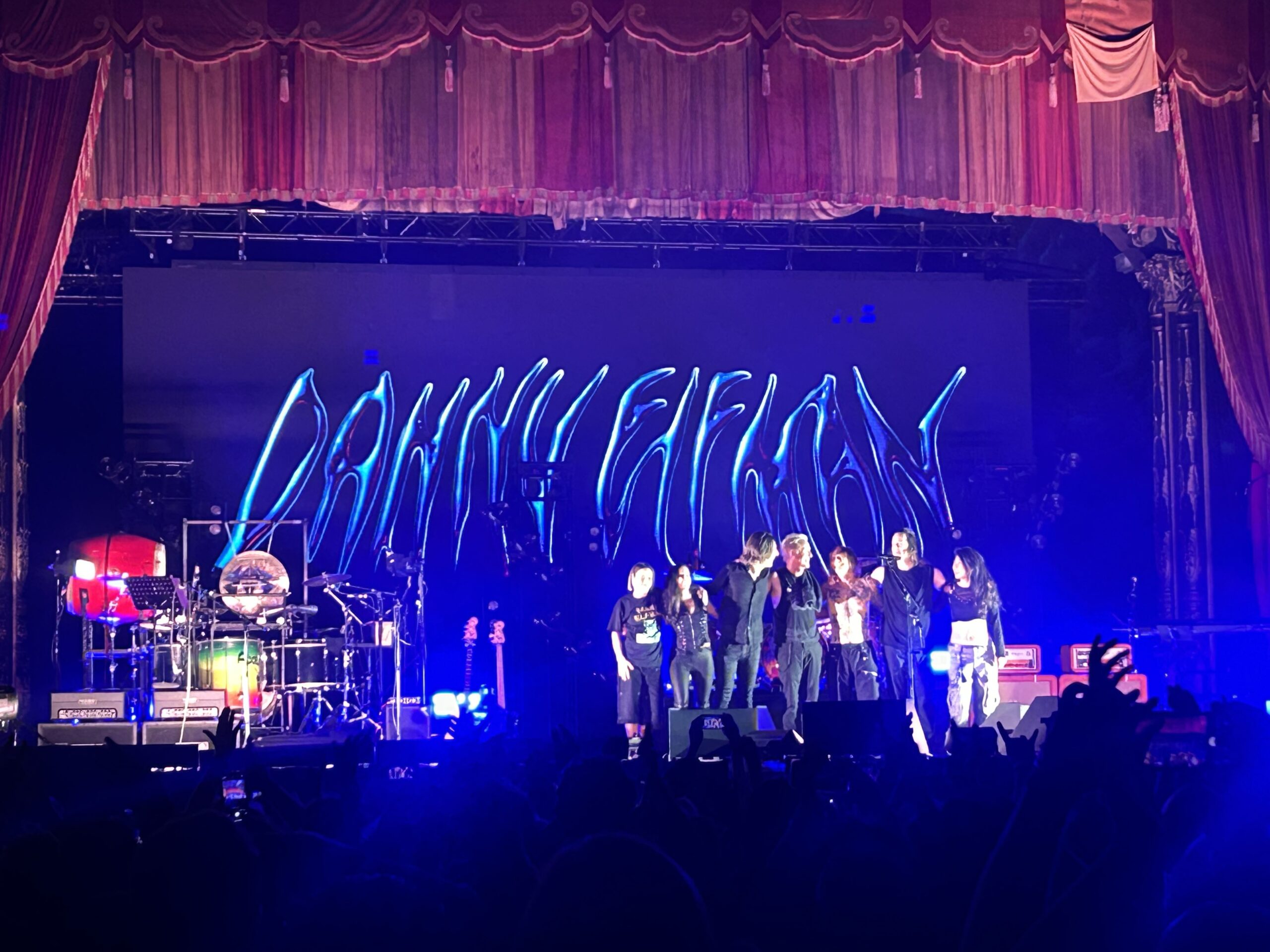
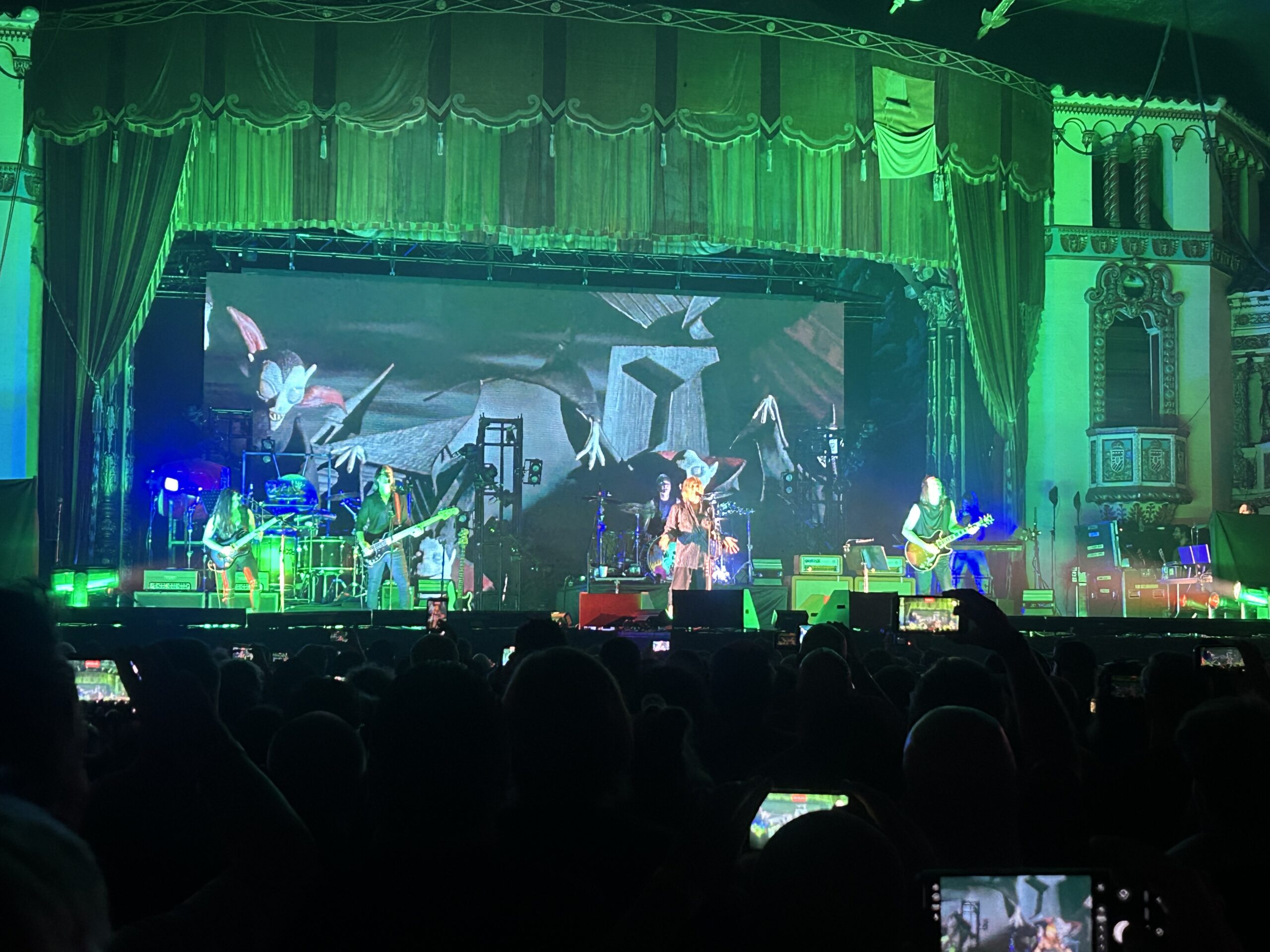
I’d forgotten until my friend told me that Danny Elfman‘s show at Chicago’s Aragon Ballroom was the first of his “rock show” tour. No orchestra, no choir, just him and a group of solid musicians.
Elfman started with “Sorry,” one of his recent tracks, and mixed up songs from multiple eras. After “Sorry,” he launched two Oingo Boingo tracks to send the crowd into a frenzy – “Insects” and “Nothing to Fear (but Fear Itself).”
Another Oingo Boingo treat came after “Native Intelligence” when Elfman announced he hadn’t performed “Just Another Day” since 1994. He sounded great. More recent tracks came afterward with “Sayonara” and “Happy,” and also a brand new one called “Upside Down.”
There’s nothing to fear.
The only song from his extensive film work he played was “This Is Halloween” from The Nightmare Before Christmas. It was a pleasant surprise, as we didn’t expect any film music.
Even if there are ghosts and vampires in the venue.
Another new one, “The River of Life,” came afterwards. It’s an interesting, slightly psychedelic track, making me want to seek out the new album. They played “Dead Man’s Party,” of course, which sounds weird without the Oingo Boingo horn section.
They closed with “No One Lives Forever,” another one that they’ve morphed into almost a metal track. The encore was “Who Do You Want to Be,” which almost blasted the back of the building into dust.
It was a fun show, full of memories and damn loud. Josh Freese on drums puts on a clinic with each song. Also, Elfman is ripped. He looks great. I hope I’m that fit in my seventies.
Everyone now wants a full Oingo Boingo reunion tour, of course. I somehow doubt it will happen, but this might be the closest we get.
When I started writing this review of Chicago post-punks Model Living‘s new album, The Wall (not a Pink Floyd cover album), my brain (and autocorrect) initially wanted to write their name as Modern Living. As I listened to The Wall, I realized this wasn’t just a mistake, but rather some subtle subconscious message I’d received because The Wall is all about modern living and how bizarre it is.
Take opening track “Tire Pile” for example. It’s all frantic beats from Nico Ciani and weird saxophone honks from Sarah Clausen while lead singer Geoff Daniels delivers some kind of weird dissertation on chaos happening around us while we’re just trying to get a good cup of coffee or make it to a job we don’t necessarily love but think is enough for now. The bass groove on “Interest” is like a hidden gem that you realize carries the entire track while Daniels wonders why we’re all so interested in everyone else’s attention.
“Model Life (Car version)” has a great line: “Our future will arrive wearing the carcass of things that you liked.” #Truth. Jay Martinez‘s guitar work on “World of Minds” is sharp, sounding sparse in the right moments and like a growling dog in others. The title of “Head of Talent” could be read a couple ways. It could refer to someone who runs a talent agency or is response for coordinating performances at a event. It could also refer to someone who thinks they have a head full of talent, but everyone else knows otherwise. Judging from Daniels’ snappy lyrics about someone who’s trying to achieve something they can’t define, I think it’s the latter. It blends right into “& Enrichment,” which is a sizzler about looking for meaning in one’s life (“I would like to think that I would lay my life down if someone could just tell me where and when to lay my life down.”).
Then comes the appropriately named “Powerful Construction Trucks & Machinery Not to Be Missed,” which runs over you like a backhoe. The wild, weird groove of “Purchase I & II” is anchored by Matt Ciani‘s bass work. “Document” is a fast, almost pure punk growler, and then we get “Backwards Racer.” It’s over thirteen minutes of strange post-psych-kraut-drone-punk that’s difficult to describe but completely fascinating to hear. The album ends with “Scoreboard,” which is sort of an epilogue to “Tire Pile.”
This is sharp post-punk and an eye-opener to the madness around us while we’re just trying to do our thing and not get caught up in it.
Keep your mind open.
[I’ll feel like I’m model living if you subscribe.]
As the story goes, Ed O’Brien had just released his first solo album, Earth, in 2020 and then the world shut down. He was barely able to promote it and then, like all of us, had to enter a period of isolation. Having that time alone, even while with his family, gave him time to brood, which led to a dark depression and a cataloguing of ideas that he kept for four years until he was able to take time away from being Radiohead‘s guitarist to write and record his excellent second solo album – Blue Morpho.
The album is named after a butterfly, and O’Brien does indeed spread his wings and transform across the album’s length. “Incantation” starts off the record with psychedelic folk flavor with O’Brien’s guitar sounding like it’s melting at one point. The title track unfurls like the titular butterfly enjoying the sun for the first time, and O’Brien did find a reconnection with nature while writing the album in Wales and spending a lot of time in the woods. The soft vocals of “Sweet Spot” reveal O’Brien’s vulnerability as he felt the world shifting around him (and the rest of us) and wasn’t sure what, if anything, to do about it.
The groove of “Teachers” is outstanding, reminding me a bit of Boz Scaggs‘ stuff. O’Brien has acknowledged that he wasn’t so much interested in rock on Blue Morpho as he was jazz and trip-hop. “Midway through life, I just lost my way,” he admits. Dude, been there. Also, O’Brien’s solo absolutely shreds on this track.
“Solfeggio” is an instrumental drone track that makes me think O’Brien was trying to capture the fuzz in his mind as he tried to wrangle all the thoughts he was putting to paper, and “Thin Places” is another instrumental that’s calmer and meditative…as if O’Brien found that the best way to wrangle all those thoughts was to set them free to land where they wanted and not grasp them so hard (if at all).
The album ends with the nearly ten-minute “Obrigado.” “Sunny days are awaiting me,” O’Brien sings, and you believe him. We can all have those sunny days where “every day’s a symphony” if we allow them to happen. The song is bright, lush, and brilliant.