It’s always good to see Clutch. They never disappoint and always sound great live, so seeing them at a small venue just over an hour’s drive from my house was an easy decision. They’re on their thirtieth year as a band, which is quite impressive.
Opening for them were two other bands I was keen on catching, and the first was King Buffalo, who opened the night with a fine set of space / psych doom rock that was just what I needed after a weird day at work. There weren’t many in the crowd who’d heard of them before, but their merch table was packed immediately after their set. They won over a lot of fans. It would be great to see them on their own.
King Buffalo wowing the crowd.
Up next were desert / stoner rock power trio Stöner, who were equally impressive with heavy bass, garage-psych drums, and cosmic fuzz guitar work. My wife was happy to hear them and understand their lyrics (topics ranging from ghosts to Evel Knievel). They also won over many fans in Ft. Wayne.
Stöner pummeling the crowd with heavy rock.
Clutch came out to a crowd that was, by now, fired up from seeing two bands that were alone worth the price of admission. They launched into a wild set, showing no rust at thirty years of age as a band. Among the highlights of the set were them playing “Far Country” from their first 7″ single back in 1991 and “Passive Restraints” (another early track). Another treat was a new single, the name of which I still can’t find, that has lyrics involving witchcraft, the Mayflower, and Nosferatu.
Clutch hitting it hard after almost two years off.
We overheard a guy on the way out telling his friend that he’d seen Clutch “twenty times” and “that’s probably in the top five” of shows he’d seen. It was a good one. All three bands were hungry for the stage and the energy gained from a live crowd. I certainly needed it, and I got it in spades.
No, you didn’t miss three posts. I only attended day four of Chicago’s annual Riot Fest this year, and it was the first Riot Fest I’d attended. A friend scored some free tickets, and far be it from me to pass up a chance to see Devo and The Flaming Lipson the same bill.
This was the hottest music festival I’ve attended in a long while. There was little shade to be had, but sunscreen and taking frequent breaks between sets meant not suffering too much. A freshly made fruit smoothie from a vegan food vendor did me wonders.
The first set we caught was by The Gories, who opened one of the main stages. They sounded loud and dirty, and I’d love to see them in a small venue, but I’m glad I finally got to see these Detroit punk legends.
The Gories!
We walked around Douglas Park and discovered the festival was widely spread out. Food vendors were in one far corner, while a smaller fifth stage was seemingly a half-mile away in the opposite corner. You’d think they’d wheel out some portable light posts with all that room, but no.
Up next were HEALTH, and one of my friends fell in love with them upon hearing their industrial set under sun so bright that their bassist / synth player had to cover his keyboards with trash bags so he could read the digital displays on them.
The sun wasn’t healthy if you weren’t wearing sunscreen that day.
After a nice break under a tree, we trotted over to the smallest stage to see Chicago noise rockers Melkbelly, who played a fun set that included a cover of Pixies‘ “Gigantic” in an attempt to make up for Pixies cancelling their tour this summer. They were so out of practice with performing live shows due to the pandemic that they forgot their merchandise in their van.
Melkbelly playing to a lot of local fans.
I scored some chicken tenders that were average at best while my friends scored an elephant ear. Riot Fest has carnival rides on site, and I can only imagine how many drunk attendees regret getting on them over the course of the weekend.
We returned to the Rebel Stage to see Bleached perform their first set in two years (according to them, and a running theme for live shows everywhere this year), right after a guy walked by us peddling mushrooms to anyone who wanted them. They sounded great, and I would’ve liked to have stayed for the whole set, but Devo was calling…
Bleached having a fun time in the sun.
The stage was packed for Devo, complete with a mosh pit and crowd surfers. It was a fun set in which they played nearly the entire Freedom of Choice album. The whole crowd was happy and still buzzing afterwards. One guy was high-fiving people and telling them, “You just saw Devo!” It was the first time my friend, Amy, had seen them. She said she smiled so much during the set that her cheeks hurt afterwards. A delight for me and my friend (and Amy’s cousin), Brian, was getting to hear Devo’s cover of “Secret Agent Man” live for the first time. I wasn’t sure I’d ever get to hear it.
De-evolution is real!
Brian and I stuck around for the Flaming Lips‘ set. Brian hadn’t seen them before, and we couldn’t get close to the stage by they started – mainly due to them starting right after Devo’s set. It was still a good set, and nearly the same as when I saw them at Psycho Music Festival. Wayne Coyne encouraged everyone to take care of each other and stay healthy so live music can continue. Amen to that.
The Flaming Lips blowing sun-baked minds.
It was a good time (and Brian’s first music festival, no less), but would I go back? The short answer is, “I don’t know.” There were a lot of bad bands on the bill on day four, and I don’t think the other three days were much better. A lot of the bands playing the various stages sounded like Rage Against the Machine rip-offs, screamo nonsense, or pop-garbage. We got the hell out of there before Slipknot and Machine Gun Kelly started their sets and laughed as we passed a guy selling nitrous oxide balloons outside the park. I might return if the lineup gets better, and they’ve already announced another Misfits reunion for 2022, but Douglas Park-area residents won’t be happy about it…
Just so we’re all clear, neither of the two men on the cover of the excellent Chicago-bred hip hop EP Happy Medium are Montana Macks, but they areJyroscope. Macks is the EP’s producer and beat maker, one of the best in the Windy City and Midwest. The men you see on the cover are the vocalists / rappers, I.B. Fokuz and Collasoul Structure.
Happy Medium is a refreshing breeze from a music world dominated by scores of rap albums that could essentially be named I’m Going to Tell You How Cool I Am for the next Forty Minutes. Happy Medium explores themes of fatherhood, practicing compassion, meditation, touring, marriage, and family.
“War Going On” is a great opener, covering stresses in relationships such as unending bills, lack of sales on the tours, and trying to hold it together the whole while (“I’m afraid what’s next will be the death of me.”). Mack’s rolling beats, accentuated with simple piano chords, are outstanding. Fokuz (“You know it’s work when you toil and you’re never content.”) and Collasoul (“Being the ‘strong one’ means you’ll never know when you’re gonna tank.”) weave intricate tales of the grind on “Work” over Mack’s melted jazz samples.
They take on the grind of not just work, but everyday life and music-making on “Auto Pilot,” with Collasoul claiming (like many of us would if we took the time to look inward), “I’m either finally mastering patience or oddly getting really good at stalling the process.” and Fokuz stating, “I feel like I’m living in a rerun.” Both men wish they could make many moments last longer on “Frozen in Time” (which has some killer scratching from DJ Seanile and some of Mack’s best sampling on the EP).
By the time we reach the closer, “Take It Easy,” the band has realized they need to just pause for a bit and reset. We all need to do this along with them. So much would fall into place if we did – better relationships, health, and society in general. We just need to follow their lead.
If they gave out awards for Most Brutally Honest Album of the Year, Lucy Dacus‘ Home Videowould certainly win it in 2021.
The singer-songwriter’s new record is a deep dive into her upbringing, teen years, and even recent years. It’s a record about self-exploration, finding and losing love and friends, and always moving forward despite the past trying to put on the brakes.
“Hot & Heavy” opens with bold guitars and bolder lyrics by Dacus about fiery passion that fades but is never forgotten. “Christine” tells a story about Dacus and a dear friend riding along one night in the back of her friend’s boyfriend’s car…and Dacus knowing her friend is stuck in a relationship that will do nothing but hold back her friend from her true potential (“If you get married, I’ll just throw my shoe at the altar and lose your respect. I’d rather lose my dignity than lose you to someone who won’t make you happy.”).
“First Time” hides a tale of new love and new sex under its rock drums and guitar strums. “In the summer of ’07, I was sure I’d go to heaven,” Dacus sings in the beginning of “VBS” (Vacation Bible School), a song about teenage sexual and spiritual confusion that erupts into buzz saw guitar at one point. “Cartwheel” starts with the sound of a record or tape starting up from a dead stop and quickly becomes an acoustic ballad for someone who chose another over her.
As if the album wasn’t heartbreaking enough, “Thumbs” is a song about Dacus fantasizing and offering about killing her friend’s long-absent father when he comes to town for a visit and pretends nothing is wrong. “Going Going Gone” is another song about walking away from a relationship she knows with yield no further results.
Dacus’ use of Autotune on “Partner in Crime” is jarring at first, but makes sense when you consider it’s a song about duplicity. “Brando” is a tale of Dacus skipping school with a boy to watch movies, knowing that he’s Mr. Not Quite Right but going along anyway. “Please Stay” is a soft plead for Dacus’ lover not to leave just yet, and how seeing their items around her place is like walking through a museum of heartbreak. The album ends with “Triple Dog Dare,” a song / confession about Dacus exploring her sexuality and being nervous as hell the whole time. It’s a gorgeous coda to the whole record.
I’m tempted to write, “This record is not for the timid.” due to it’s raw honesty, but maybe it is. It’s a record for anyone feeling timid about who they are, who they love, or who they can become.
“I hang my coat on any old hook, but I prefer the second from the left,” Liam Kazar sings on the opening track of his fun, funky, and solid debut album Due North. The album mixes a lot of influences, sometimes sounding like a Warren Zevon album, other times like a Lindsey Buckingham or Joe Jackson record, but most of the time like Kazar’s groovy self. It’s the kind of album that makes you want to hang out with him for a night just to hear his stories.
That opener, “So Long Tomorrow,” blends Kazar’s rock guitar with a groovy bass line and his witty lyrics as he tells himself, and the rest of us, to stay in the present. “Old Enough for You” bumps and bubbles like a witch’s brew created in a disco, with Kazar singing about trying to be hip and refined in order to impress a potential lover. The sassy, swinging “Shoes Too Tight” was one of my favorite singles of 2020. The whole thing grooves in a way that is hard to describe and impossible to ignore.
“Nothing to You” mixes some alt-country twang into the record while Kazar sings about pining from afar for someone who barely knows he exists. “On a Spanish Dune” starts off like a sad synthwave track and then transforms into a meditation on the self. “Everybody’s asking me what I’m going to be. I couldn’t tell you if I tried. I’m just a poem with an open line,” Kazar sings – and sums up presence and ennui in two sentences.
“The clouds are coming over, but I shouldn’t be surprised,” Kazar sings on “Frank Bacon” – a snappy, slick track with some smooth guitar work from him and plenty of lyrics about realizing you have to play the hand you’re dealt and make the best of it. “I’ve Been Where You Are” has synthwave touches while Kazar let’s us know that he’s been in the same boat of the blues as we’ve all journey on from time to time.
The slightly countrified “No Time for Eternity” has some of Kazar’s best vocal work (with help from Andrew Sa). He keeps it simple, which gives it more impact. “Give My World” takes on a bluesy feel with its lyrics and guitar work, but then becomes something dreamy with the use of bird calls and psychedelic synths. “It seems I haven’t changed, half as much as I’ve let you down,” Kazar sings in a brutally honest self-appraisal. The synths turn into church organs on the closer, “Something Tender” – a song about realizing that enabling and embracing illusions, especially those in relationships, ultimately leads to misery.
Due North is a stunning debut, and easily one of the best debuts I’ve heard in a while and one of the best albums of the year. There’s nothing here you won’t like.
Savage Young Dü from Hüsker Dü is a four-LP / three-CD compilation by Numero Group of early tracks from the band, spanning 1979-1983. It’s jam-packed (69 tracks, 47 of which have never before been released, and there are scores more they could still put on another compilation – let’s hope so) with demos, live cuts, B-sides, and remastered cuts of their first singles and EPs. It’s essential for any fan of the band, or early 1980s punk rock, and completely bonkers. The booklet inside the set is a wealth of information, too, with interviews and stories from the band members (Grant Hart – drumsand vocals, Greg Norton – bass, Bob Mould – guitar and vocals) and many of their friends and early engineers / producers.
The first track is a demo version of “Do You Remember?” and it’s an instant classic with Norton’s chugging bass and snotty, bratty vocals from Mould while Hart tries to knock down the walls of the record store basement where they recorded it. “Sore Eyes” could’ve been a Buzzcocks track, and it’s neat to hear the band trying different musical styles and exploring multiple influences in these early tracks before settling into their “go like hell and blow out the speakers” sound. “Can’t See You Anymore” has Hart telling a girl he can’t date her anymore because she’s wants too much sex.
By the time we get to “Do the Bee” a couple tracks later, the band is already going nuts and screaming from the basement floor (while writhing around on it, according to the story listed in the booklet). Their cover of The Heartbreakers‘ “Chinese Rocks” is delightfully sludgy. A “rehearsal” version of “Data Control” has Norton’s bass tuned so heavy it could sideline for a doom metal band.
The live version of the fun “Insects Rule the World” ends with Mould proclaiming, “We’re not the most professional band in the Twin Cities,” but Hüsker Dü would go on to become one of the big three powerhouses of that area (along with Prince and The Replacements). The live cut of “Sexual Economics” has a cool post-punk edge to the rusty knife sound of it, and Mould’s solo is great.
“Statues” and “Amusement” are two early classics. The venue where the live version of “Walk within the Wounded” was recorded can barely contain the song. “I’m Tired of Doing Things Your Way” sounds like a fist fight is going to break out at any second. It probably did during “All Tensed Up” – a blistering cut. “Don’t Try to Call” goes by so fast that you barely have time to breathe before “I’m Not Interested” starts. Mould screams, “Fuck you!” to the small crowd at the end of a live version of the furious “Let’s Go Die.”
Grant’s drumming on a live recording of “Private Hell” is somewhat Devo-like, and his work on the following track, “Diane,” sounds like it inspired Dave Grohl. “In a Free Land” is one of many politically charged Hüsker Dü tracks. “What Do I Want” has so much angst that it makes you want to smash a wall with a hammer. “M.I.C.”, on the other hand, makes you want to smash the whole damn house. “Afraid of Being Wrong” is like being at the wrong end of a dodge ball game and the message is still resonant today.
Their cover of Donovan‘s “Sunshine Superman” is a fun inclusion, with Hart’s vocals and drum work both a hoot. By the time we get to “Everything Falls Apart,” we can hear hints of the future sound of the band. The collection ends with six loud, raucous live tracks, including a somehow even faster version of “Do You Remember?”, a Norton-heavy version of “It’s Not Funny Anymore,” and a version of “It’s Not Fair” that sounds like a 747 taking off in a hailstorm and closes with a minute of bass and guitar feedback before someone at the club shuts off their amps and calls them “one of the greatest hardcore bands in the country.”
This thing is a treasure trove, and not for the timid. It might flatten the unwary. In other words, it’s amazing.
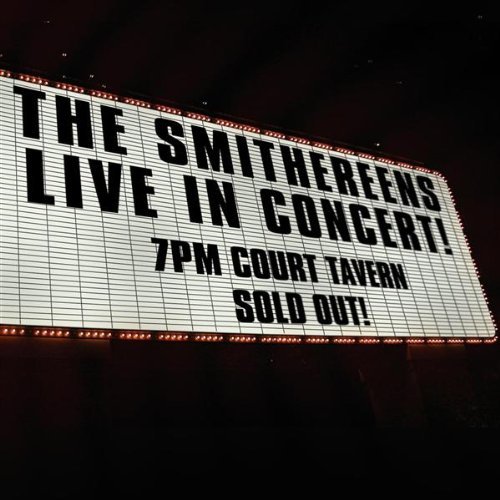
Recorded over the course of four nights at The Court in New Brunswick, New Jersey, Live in Concert! Greatest Hits and More by The Smithereens was a great return to the band’s home state and a familiar venue to a raucous crowd.
The album captures the band’s raw, rock sound well. Consider yourself lucky if you got to see them live in their heyday. They were one of the best touring bands in the United States (and a new iteration of them still tours with Marshall Crenshaw on lead vocals, no less).
Opening track “Behind the Wall of Sleep” still punches hard, and “Drown in My Tears” somehow hits even harder. Jim Babjak and Pat Dinizio‘s guitars are a tremendous one-two punch throughout it (and the whole album, really). “Miles from Nowhere” builds like a strong, chugging engine in a hot rod warming up before a drag race down a long stretch of highway. Dennis Diken‘s drumming propels the track, and he sneaks some jazz swing into the mix.
“Room without a View” slows things down just enough for you to catch a breath, but not by much. “Only a Memory” keeps your toes tapping, and Severo Jornacion‘s bass work on it is a solid groove that keeps the band locked in tight. “House We Used to Live In” rocks as well as you remember. It’s always better live, and this captured version doesn’t disappoint. It drifts into a bit of psychedelic territory about halfway through the track (which is almost an eleven-minute version) and gives everyone ample opportunity to stretch their muscles and show off their chops (especially Diken).
The slow, lovely “Spellbound” is almost shocking after the previous track, but it soon wraps you in its warm blanket and has you swaying like a reed in the wind. The album contains two new (for the time) tracks, and the first is the haunting, strong “Since You Went Away” – a great example of Smithereens songs about lost love. “She’s Got a Way” is a great example of another type of Smitheerens song – power pop.
“Yesterday Girl” is another power pop gem, with Diken and Jornacion combining their rhythmic powers for all of your benefit. “Well Alright” is nearly a Dinizio solo effort with his acoustic guitar and strong vocals, until the drum fill kicks the song up a couple notches. The version of “Especially for You” on the album has a bit of a bluesy swagger to it that I like. “Any Other Way” is the second new track on the album, and it’s a hip tune about (you guessed it) Dinizio finding and losing love.
“Top of the Pops,” one of their biggest hits, sounds a little extra grungy here, which I don’t mind at all. Their cover of “Time and Time Again” is a blast and always a wonderful salute to one of their biggest influences – Paul McCartney. The album ends with three classics: “Blood and Roses” (with a downright furious solo from Babjak), an eight-minute version of “A Girl Like You,” and – a welcome addition and a salute to their old school fans – the theme to the Batman TV show from the 1960s (which was a staple of their early live sets).
It’s a fun album and a great reminder of why The Smithereens are one of the best American rock bands of their era (or any other, really).
You Don’t Know, the new album by Lizzie Loveless, is an album that collects memories, stories, possibly a couple tall tales, and love poems and then focuses on them with presence and mindfulness…and lovely vocals and beats. It’s also an album with many homes – New York City, Halifax, Nova Scotia, California forests, or the many stops of a tour she took with her band TEEN.
“You don’t know what it means to be with me,” she sings on the opening title track. Loveless (AKA Lizzie Lieberson) braces herself for heartbreak as a relationship is about to end, but she’s walking out with her chin up and not looking back. It’s a lovely opener, with crushing lyrics like “Maybe we should just forget it. We had out fun playing house. I know it wasn’t always easy.”
“The Joke” is a simple tune consisting of Loveless’ voice, acoustic guitar, electric beats, bright synths, and lyrics about a health crisis (“My body betrays me.”) Loveless overcame. “Memory” has Loveless wondering if she’ll ever forget a lover as 1980s soft ballad synths and beats play behind her. “My thoughts are clean though dirty from dreams,” Loveless sings on the sexy, strong track “Eyes of a Man.” The buzzsaw guitar and Theremin-like synths mix well together to put you a bit on edge.
As if she hasn’t bared her soul enough, Loveless tells us, “I’m stuck in a loveless black hole.” on “Loveless.” You can’t help but think she’s a bit tongue-in-cheek about it, however, as the thumping electro-bass and the funky beats on the track are dance floor-ready. “Hold Me Close,” with its lyrics of being in different places during different seasons, seems to be a song about missing someone while on tour. “Window” is another pretty (listen to those synths and toe-tapping beats) gut punch as Loveless sings about waiting for a lover she knows won’t return.
“New York, Yesterday” is a tale of Loveless wandering the Big Apple hoping to see her lover, even though she knows he’s in Los Angeles. “Underneath” stacks groovy bass atop Loveless’ echoing vocals about burying her emotions, even when she knows that revealing them could take her further in a relationship. The album closes with “Again,” a fun title to end a record, and a track about about Loveless wanting love but a potential lover just wanting to smooch.
You Don’t Know is a lovely record all-around, and will probably be one of the best albums of love songs of the year. It’s soulful, sometimes scorching, and sometimes sweet. It’s all good.
Keep your mind open.
[Don’t forget to subscribe.]
[Thanks to Gabriel at Clandestine Label Services.]
If your band’s name is Shred Flintstone and your album is titled Unlimited Power, you need to have the chops to back up those things. Otherwise, you’ll be dismissed as a “joke band.” Shred Flintstone need not worry. They have enough chops to power a car-crushing monster truck.
Album opener “All My Friends Are Bread” starts us off with post-punk bass riffs Ed Weisgerber and guitar chords from Dan Barrecchia that sound like frantic radio transmissions from a military base being attacked by a giant monster. The whole thing turns into a wild assault on the senses in just a few moments. Wesigerber’s fury continues on the title track while his rhythm section mate, Joey Giambara, locks in everything with crisp chops. “Shred Durst” shreds harder than anything Fred Durst has released in years.
Barrecchia’s guitar work on “Red Dawn” reminds me of early Nirvana tracks. “Friend of a Friend of the Devil” is, dare I say it, a bit psychedelic as Barrecchia sings about trying to run from his fate / sins and then learning to accept it / them. The three of them go nuts on “Big Gun” – a New Bomb Turks-like punk track with the vocal reverb turned up to eleven. “Escape from New Jersey” (the band’s home state) turns the vocal effects up to twelve and drops riffs and drum fills heavier than a dump truck full of broken concrete. “Dirty Boi” comes at you like Leatherface with its heavy buzz and frantic pounding. The album’s closer, “Always,” wraps things up with surf and even a bit of 1950s love ballad crooning.
So, yes, Shred Flintstone have the chops to back up their name and album’s title, as well as knock the speakers off your shelves or walls. If you’re thinking of installing solar panels to power your house, you could just plug this album into your fuse box and save a ton of money.
Keep your mind open.
[Unleash the unlimited power of your e-mail inbox by subscribing!]
Canadian psych-electro rockers SUUNS were tired in 2019. They had been touring almost non-stop since 2010. They needed to slow down, recharge, and refocus, but they didn’t want to stop making music. So, they stopped, or perhaps were forced to stop due to the pandemic, took a breath, and created The Witness.
Opening track “Third Stream” begins the album with a slow, brooding pace, almost like some of Pink Floyd‘s synth-driven psychedelic cuts. The lyrics tell of checking out from the systemic grind and seeking greater things like peace and love. The drop of the echoing guitar and drum beats on it will grab your attention. The title track, with its bumping electro bass and beats, is a song about watching things fall apart around you and avoiding the temptation to fall into the miasma.
The slow, somewhat creepy beat of “C-Thru” is perfect for late night drinks, meditations, or slow dancing with multiple lovers. “Timebender” mixes birdsong with distant guitar riffs and soft beats for an intriguing track about looking beyond the self.
“Release yourself, remove this shroud. What you see when you look around. Clarity so real, don’t change your mind.” Profound lyrics about in “Clarity,” a nice standout in the middle of the record. According to SUUNS, they’ve been working on “The Fix” for about four years and it finally found a home on The Witness. It’s a strange, quirky track with a beat that seems to shift in about five different directions. In other words, it’s kind of cool. “Go to My Head” combines Bossa nova guitar, subdued electronic beats, and simple lyrics about moving on from a finished romance into a nearly six-minute hypnotic therapy session. The album ends with “The Trilogy” – a song that, the band admits, they just sort of let happen once they got into a groove they all enjoyed. How cool is that?
SUUNS have also admitted that The Witness is a stepping stone of them toward different types of material they want to record and different themes they wish to explore. It’s a good start, and it makes you interested in what they’re planning next – as any good album should.