I've been a music fan since my parents gave me a record player for Christmas when I was still in grade school. The first record I remember owning was "Sesame Street Disco." I've been a professional writer since 2004, but writing long before that. My first published work was in a middle school literary magazine and was a story about a zoo in which the animals could talk.
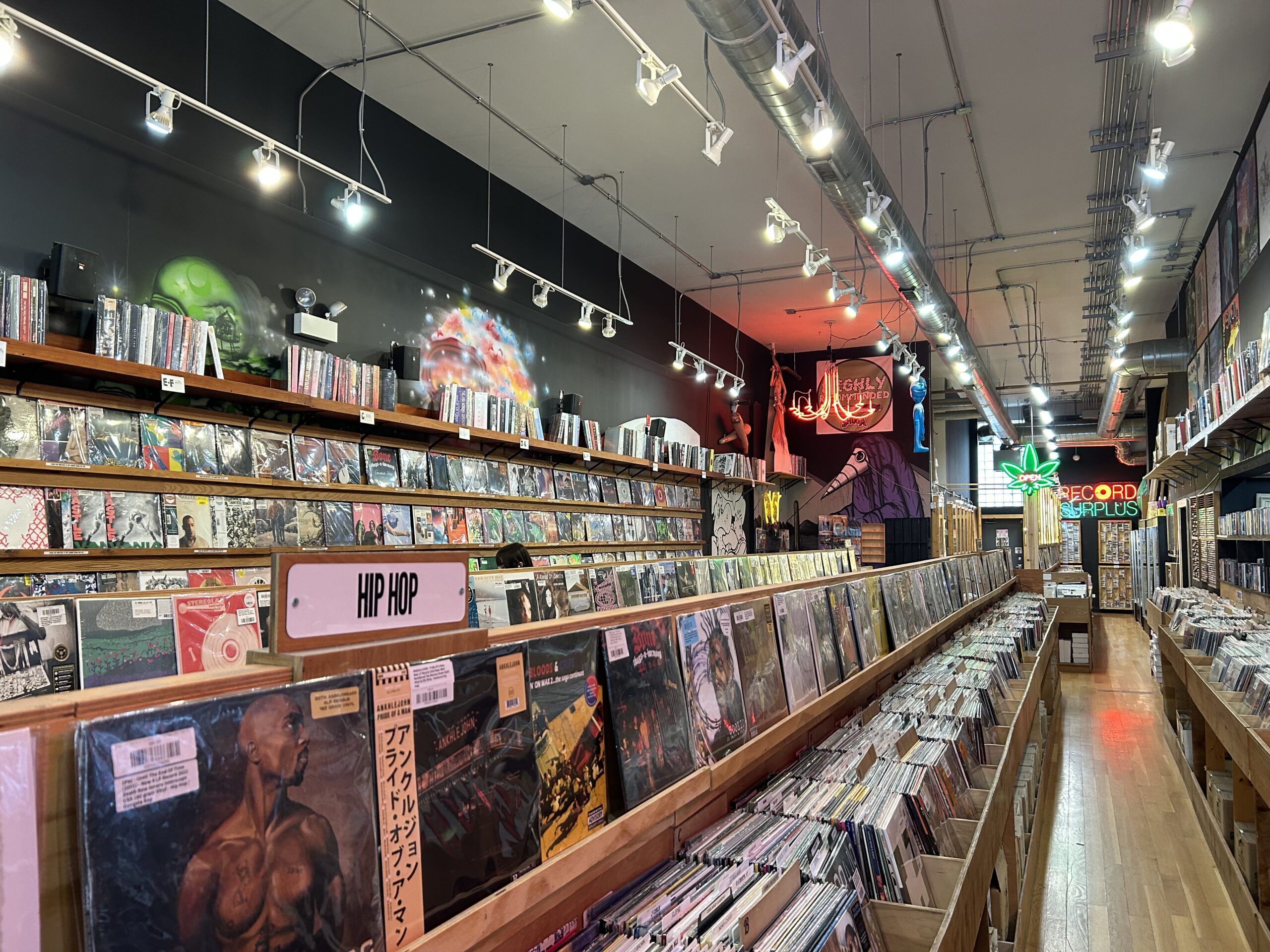
Located at 1272 North Milwaukee Avenue, Shuga Records is a treasure trove of vinyl and other treats for music lovers.
That’s just two aisles of stuff in here. The store is deceptively long. You wouldn’t guess from the outside that it’s so deep. The stock seems to stretch out for a half-block. Their hip hop and rap section is impressive, and there’s another room on the right side of this image with even more vinyl in it.
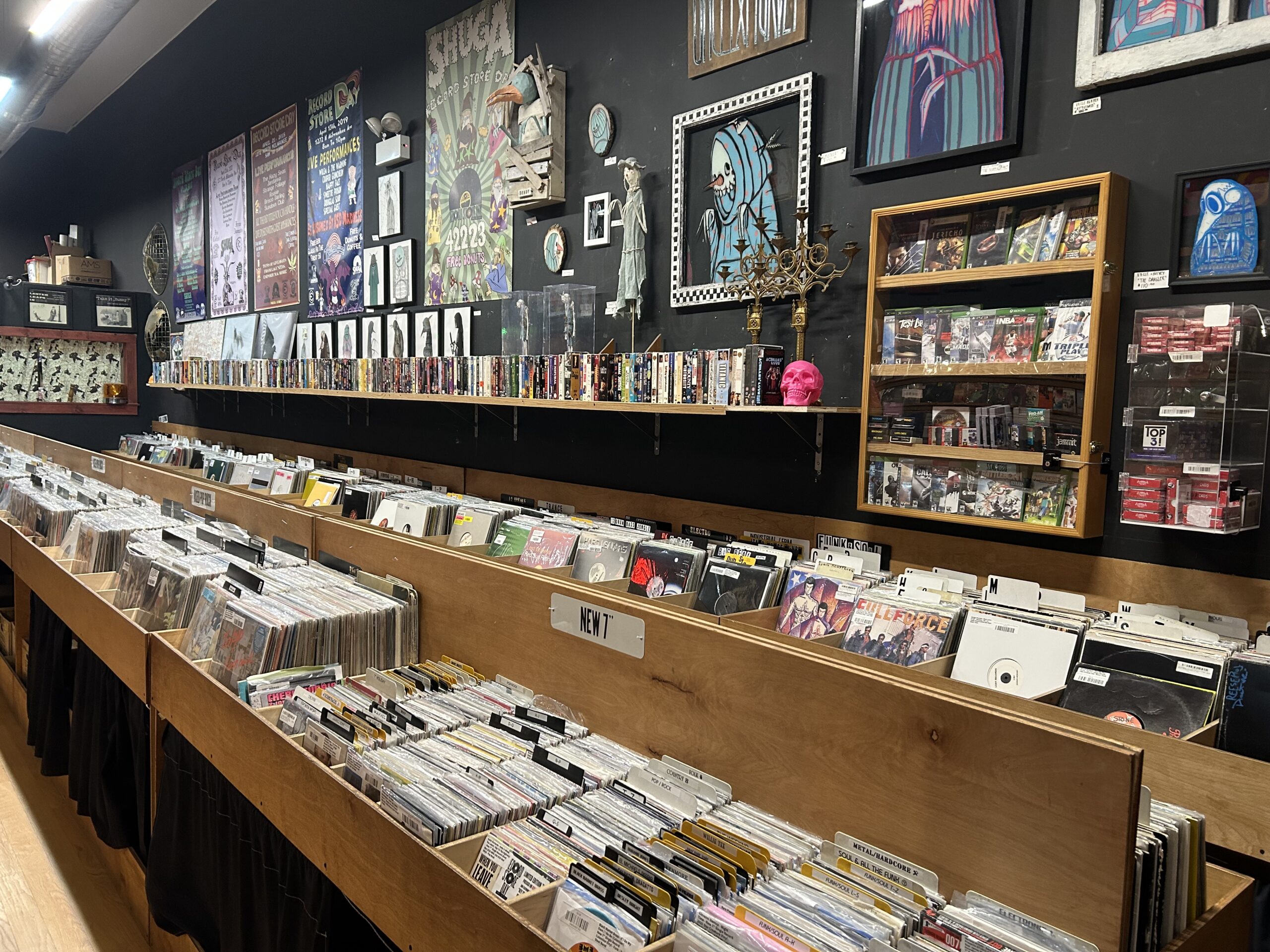
A large portion of this is made up of 7″ singles, and there’s a good amount of obscure tapes and CDs as well, kept locked up in cases.
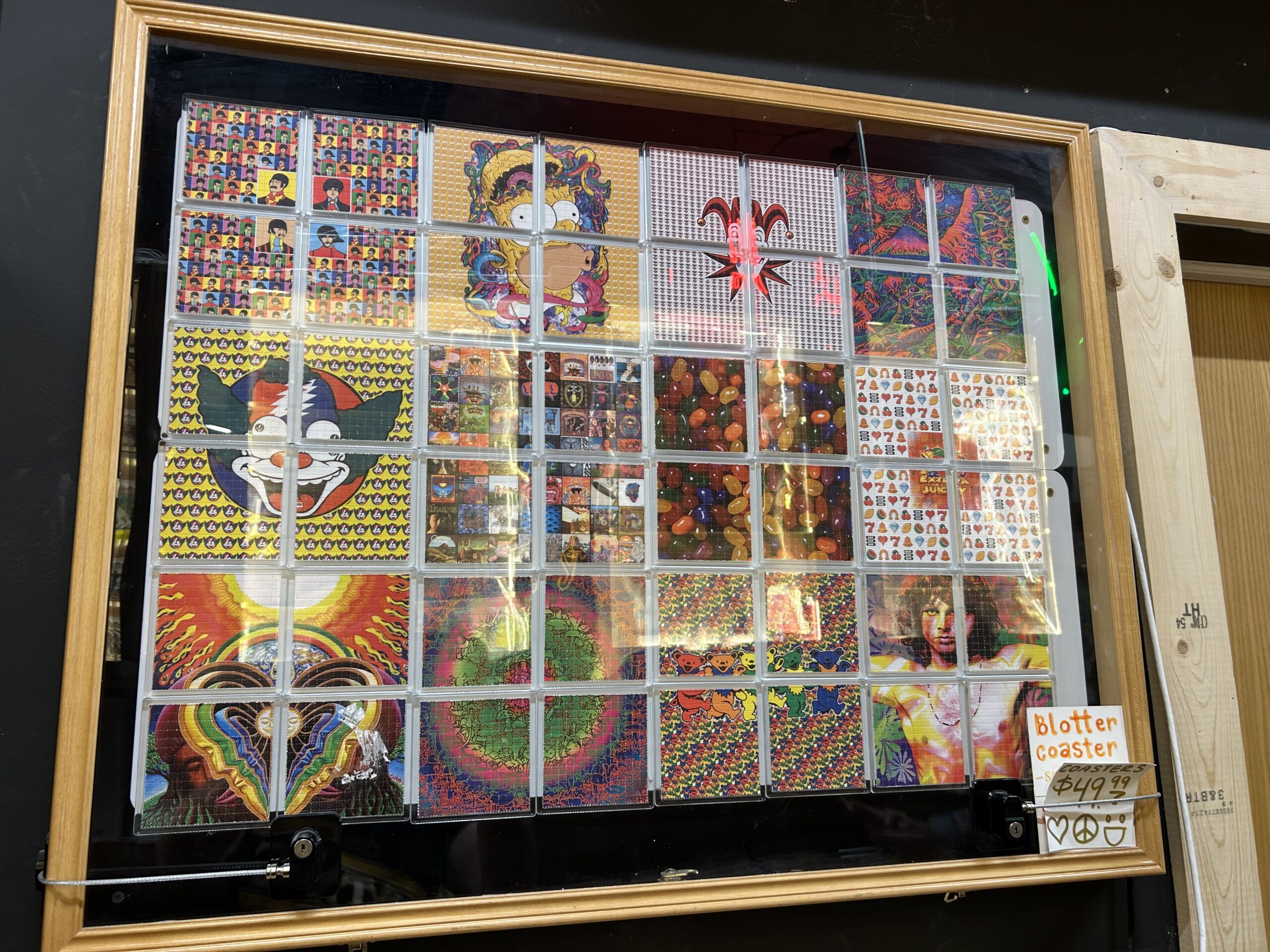
Those are just the cass-singles. There were many cases of cassettes, and even a case of coasters designed to look like sheets of blotter acid.
I didn’t walk out with anything, but a record collector could easily blow a couple hours here. Give it a look if you’re in the neighborhood.
Originally released in 2006, the new reissue of Motörhead‘s Kiss of Death is here for its 20th anniversary and includes a lot of great extras.
The album gets off to a fast start (of course) with “Sucker,” and Mikkey Dee getting you moving with his fast, sharp beats. The firearms pictured on the album’s cover fit right in with the hard and heavy “Trigger” (which has a great breakdown in it) and “Under the Gun.”
“Listen to the hundred million dead. They didn’t know it, but they died for you,” Lemmy Kilmister sings / roars on the excellent “Sword of Glory” (which features a soaring solo from Phil Campbell). “If all that slaughter doesn’t make you sad, you’ll just make the same mistake again and again,” Kilmister warns. It hits hard, like everything Motörhead does.
Speaking of hitting hard, Kilmister’s bass on “Be My Baby” sounds like an eighteen-wheeler coming at you with no brakes down a steep hill. The furious “Going Down” has a ripping outro that leaves you breathless. The album ends with the 2006 version of “R.A.M.O.N.E.S.”, a fun tribute to some of their punk contemporaries…unless you get the CD version of this reissue, because that includes the gritty, dangerous “Whiplash” and a live version of “R.A.M.O.N.E.S.”
The album (in both CD and LP versions) also includes a previously unreleased full live recording of a 2007 concert from the Netherlands Lowlands Festival. It includes live versions of Kiss of Death tracks “One Night Stand” and “Be My Baby,” as well as classics like “Stay Clean,” “Metropolis,” “I Got Mine,” “Killed by Death,” and, of course, “Ace of Spades.”
It’s another gem of a record for your Motörhead collection. The amount of unreleased material that’s come out in the last few years is astounding, and there seems to be no end in sight.
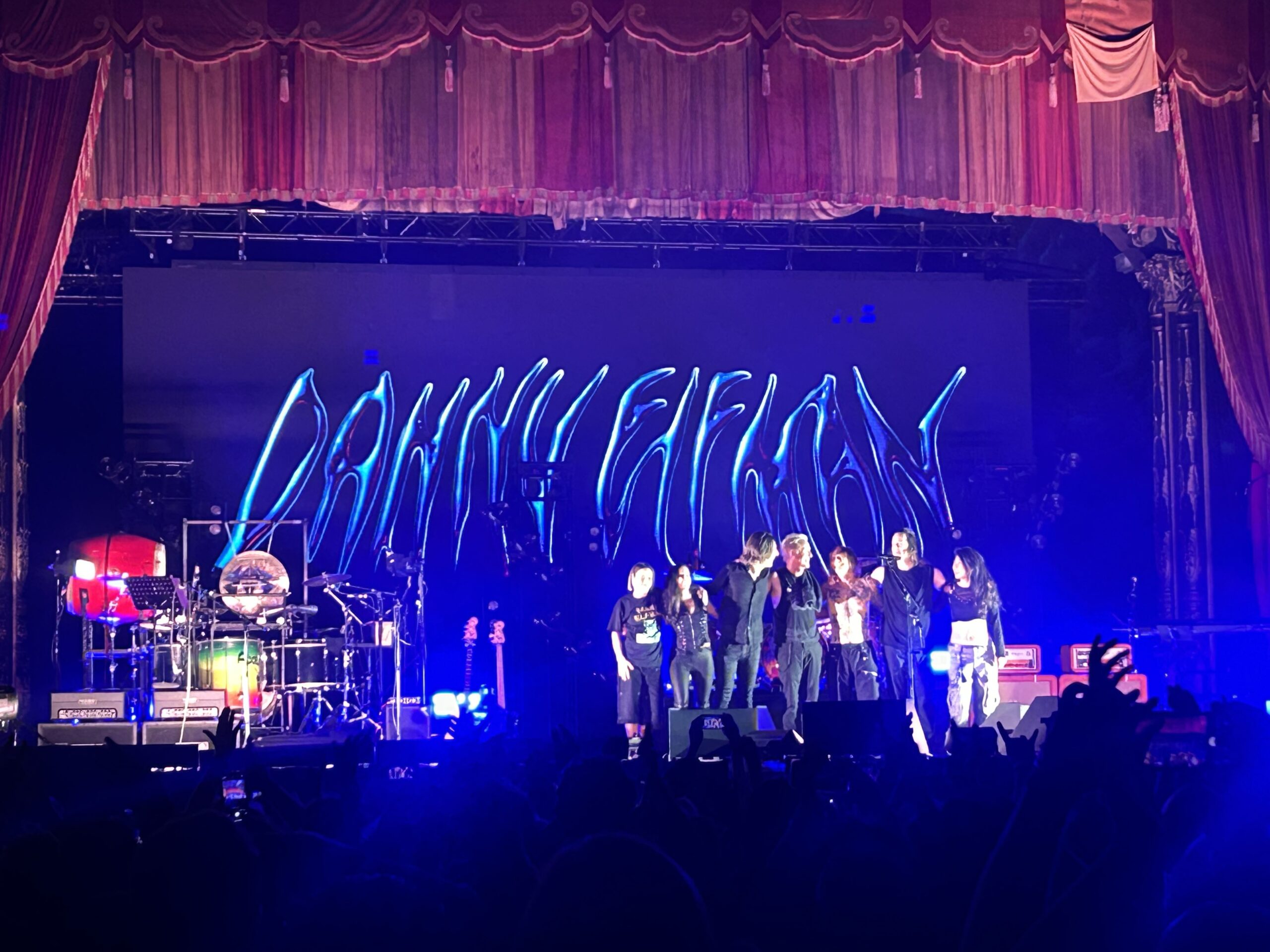
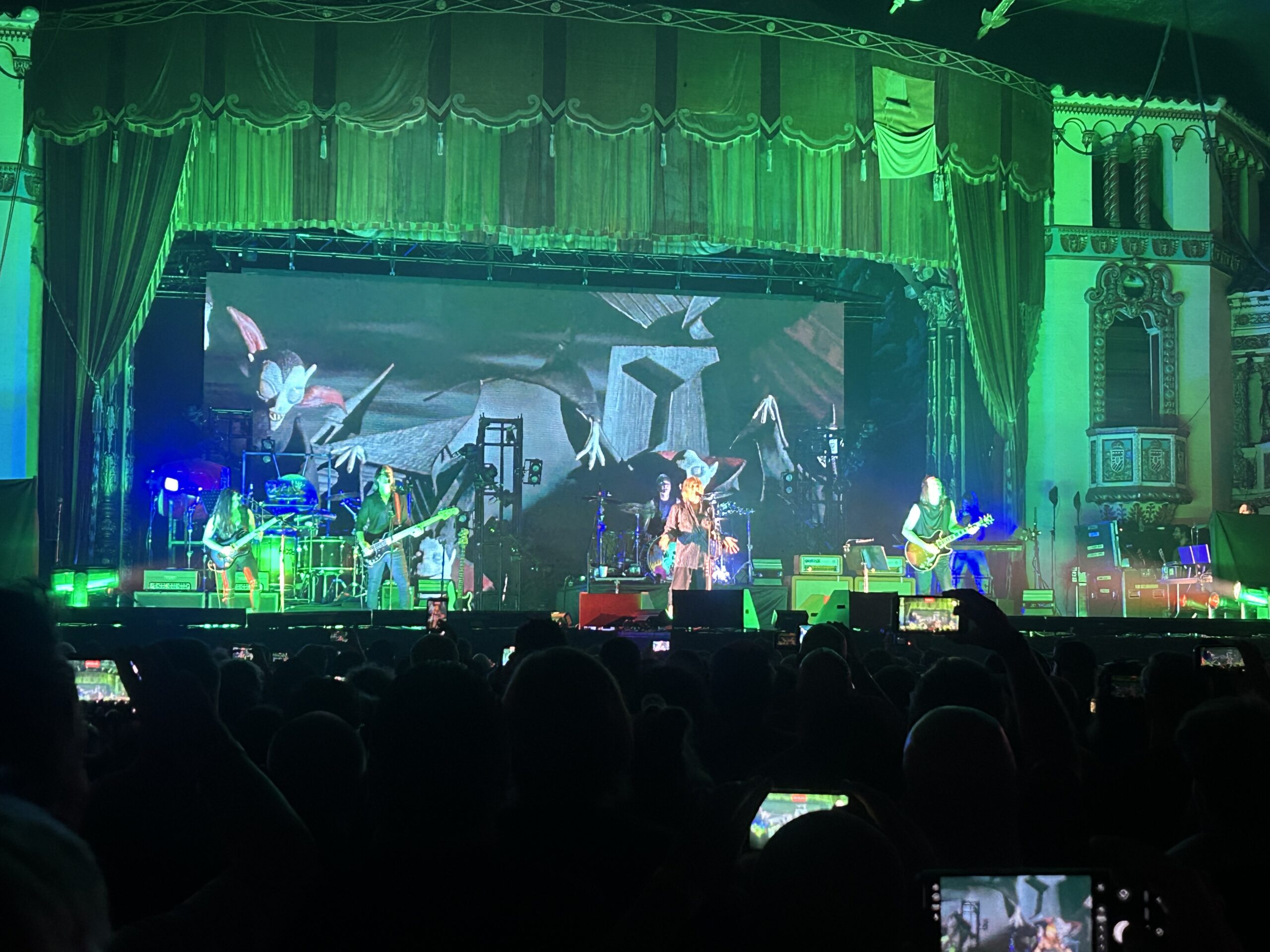
I’d forgotten until my friend told me that Danny Elfman‘s show at Chicago’s Aragon Ballroom was the first of his “rock show” tour. No orchestra, no choir, just him and a group of solid musicians.
Elfman started with “Sorry,” one of his recent tracks, and mixed up songs from multiple eras. After “Sorry,” he launched two Oingo Boingo tracks to send the crowd into a frenzy – “Insects” and “Nothing to Fear (but Fear Itself).”
Another Oingo Boingo treat came after “Native Intelligence” when Elfman announced he hadn’t performed “Just Another Day” since 1994. He sounded great. More recent tracks came afterward with “Sayonara” and “Happy,” and also a brand new one called “Upside Down.”
There’s nothing to fear.
The only song from his extensive film work he played was “This Is Halloween” from The Nightmare Before Christmas. It was a pleasant surprise, as we didn’t expect any film music.
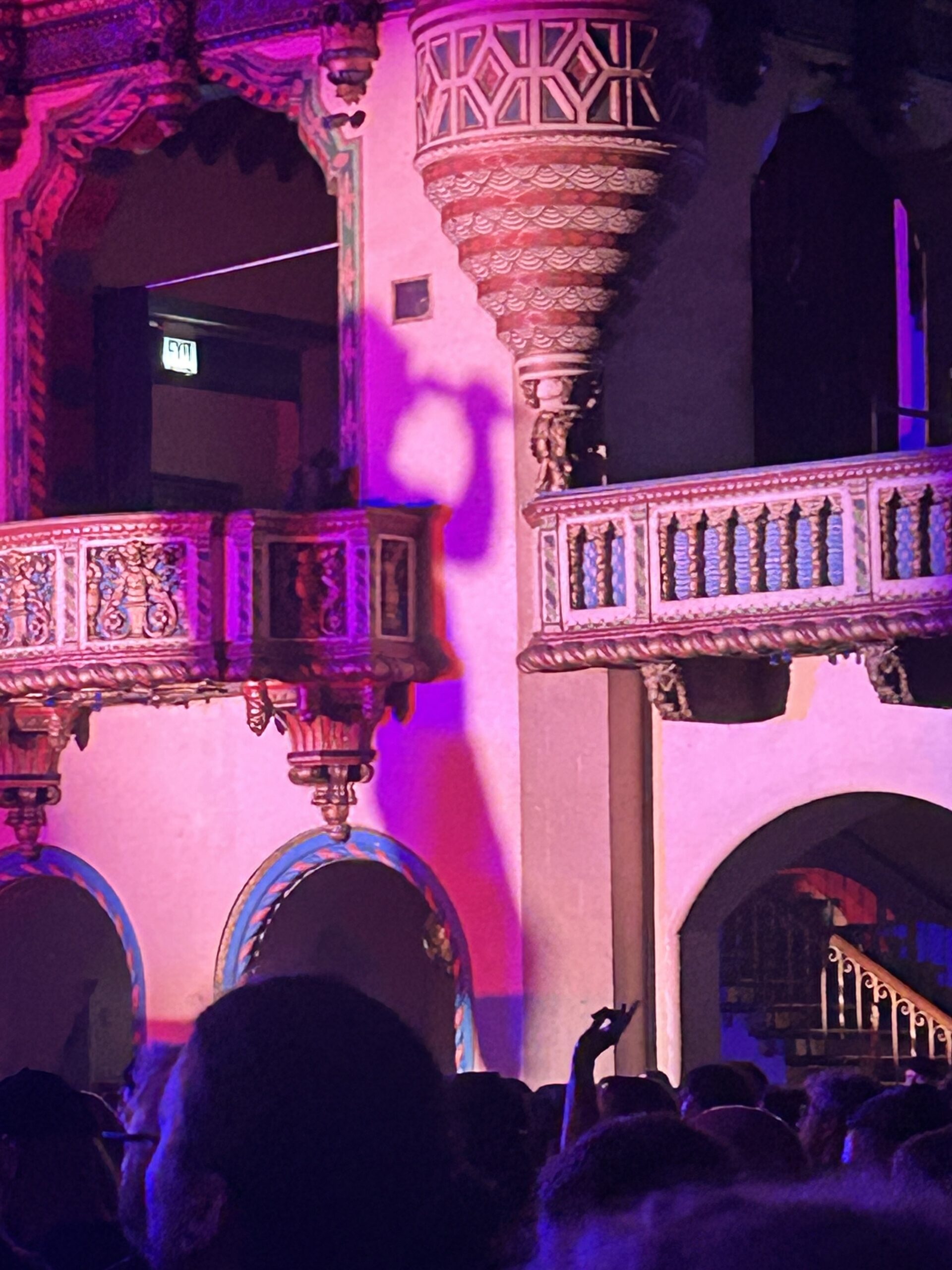
Even if there are ghosts and vampires in the venue.
Another new one, “The River of Life,” came afterwards. It’s an interesting, slightly psychedelic track, making me want to seek out the new album. They played “Dead Man’s Party,” of course, which sounds weird without the Oingo Boingo horn section.
They closed with “No One Lives Forever,” another one that they’ve morphed into almost a metal track. The encore was “Who Do You Want to Be,” which almost blasted the back of the building into dust.
It was a fun show, full of memories and damn loud. Josh Freese on drums puts on a clinic with each song. Also, Elfman is ripped. He looks great. I hope I’m that fit in my seventies.
Everyone now wants a full Oingo Boingo reunion tour, of course. I somehow doubt it will happen, but this might be the closest we get.
When I started writing this review of Chicago post-punks Model Living‘s new album, The Wall (not a Pink Floyd cover album), my brain (and autocorrect) initially wanted to write their name as Modern Living. As I listened to The Wall, I realized this wasn’t just a mistake, but rather some subtle subconscious message I’d received because The Wall is all about modern living and how bizarre it is.
Take opening track “Tire Pile” for example. It’s all frantic beats from Nico Ciani and weird saxophone honks from Sarah Clausen while lead singer Geoff Daniels delivers some kind of weird dissertation on chaos happening around us while we’re just trying to get a good cup of coffee or make it to a job we don’t necessarily love but think is enough for now. The bass groove on “Interest” is like a hidden gem that you realize carries the entire track while Daniels wonders why we’re all so interested in everyone else’s attention.
“Model Life (Car version)” has a great line: “Our future will arrive wearing the carcass of things that you liked.” #Truth. Jay Martinez‘s guitar work on “World of Minds” is sharp, sounding sparse in the right moments and like a growling dog in others. The title of “Head of Talent” could be read a couple ways. It could refer to someone who runs a talent agency or is response for coordinating performances at a event. It could also refer to someone who thinks they have a head full of talent, but everyone else knows otherwise. Judging from Daniels’ snappy lyrics about someone who’s trying to achieve something they can’t define, I think it’s the latter. It blends right into “& Enrichment,” which is a sizzler about looking for meaning in one’s life (“I would like to think that I would lay my life down if someone could just tell me where and when to lay my life down.”).
Then comes the appropriately named “Powerful Construction Trucks & Machinery Not to Be Missed,” which runs over you like a backhoe. The wild, weird groove of “Purchase I & II” is anchored by Matt Ciani‘s bass work. “Document” is a fast, almost pure punk growler, and then we get “Backwards Racer.” It’s over thirteen minutes of strange post-psych-kraut-drone-punk that’s difficult to describe but completely fascinating to hear. The album ends with “Scoreboard,” which is sort of an epilogue to “Tire Pile.”
This is sharp post-punk and an eye-opener to the madness around us while we’re just trying to do our thing and not get caught up in it.
Keep your mind open.
[I’ll feel like I’m model living if you subscribe.]
As the story goes, Ed O’Brien had just released his first solo album, Earth, in 2020 and then the world shut down. He was barely able to promote it and then, like all of us, had to enter a period of isolation. Having that time alone, even while with his family, gave him time to brood, which led to a dark depression and a cataloguing of ideas that he kept for four years until he was able to take time away from being Radiohead‘s guitarist to write and record his excellent second solo album – Blue Morpho.
The album is named after a butterfly, and O’Brien does indeed spread his wings and transform across the album’s length. “Incantation” starts off the record with psychedelic folk flavor with O’Brien’s guitar sounding like it’s melting at one point. The title track unfurls like the titular butterfly enjoying the sun for the first time, and O’Brien did find a reconnection with nature while writing the album in Wales and spending a lot of time in the woods. The soft vocals of “Sweet Spot” reveal O’Brien’s vulnerability as he felt the world shifting around him (and the rest of us) and wasn’t sure what, if anything, to do about it.
The groove of “Teachers” is outstanding, reminding me a bit of Boz Scaggs‘ stuff. O’Brien has acknowledged that he wasn’t so much interested in rock on Blue Morpho as he was jazz and trip-hop. “Midway through life, I just lost my way,” he admits. Dude, been there. Also, O’Brien’s solo absolutely shreds on this track.
“Solfeggio” is an instrumental drone track that makes me think O’Brien was trying to capture the fuzz in his mind as he tried to wrangle all the thoughts he was putting to paper, and “Thin Places” is another instrumental that’s calmer and meditative…as if O’Brien found that the best way to wrangle all those thoughts was to set them free to land where they wanted and not grasp them so hard (if at all).
The album ends with the nearly ten-minute “Obrigado.” “Sunny days are awaiting me,” O’Brien sings, and you believe him. We can all have those sunny days where “every day’s a symphony” if we allow them to happen. The song is bright, lush, and brilliant.
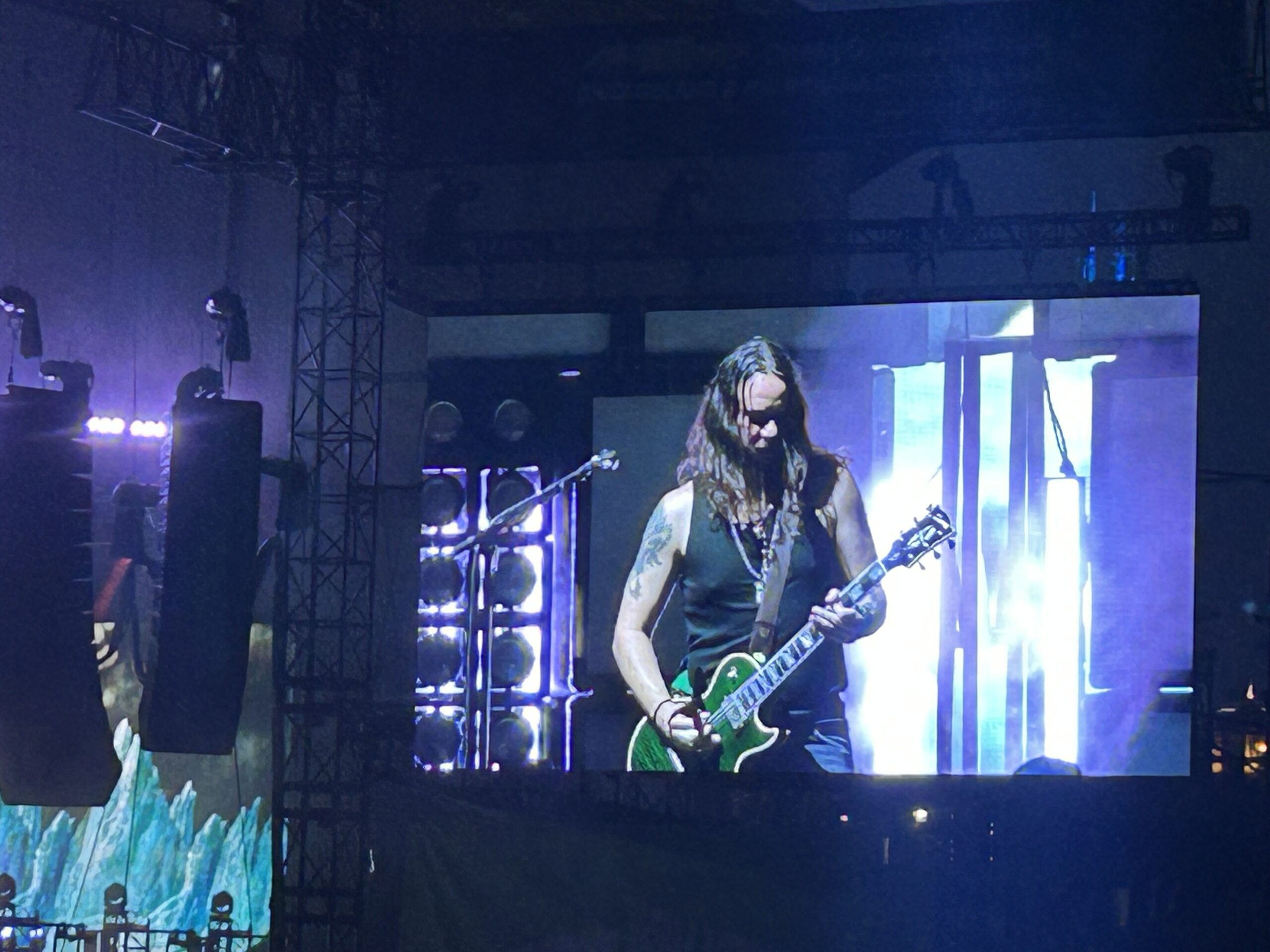
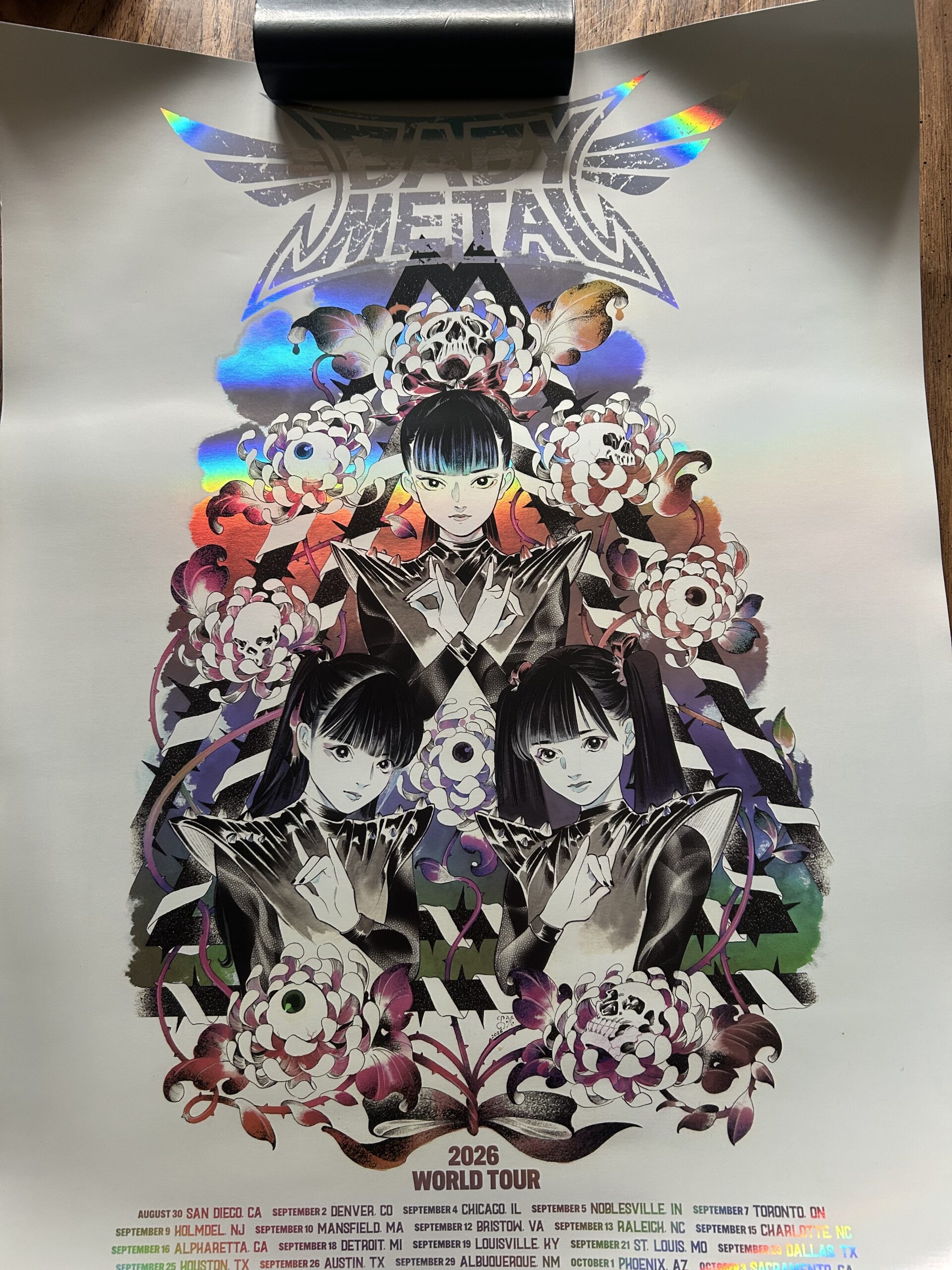
It was hot and humid in Chicago on September 04, 2026. The whole Museum Campus area was busy with two different crowds: One was going to see Kanye West perform his rumored AI-derived new music for the second night at Soldier Field, and the other was a bunch of metal heads and J-rock fanatics heading to Huntington Bank Pavilion to see a triple bill of female-led metal bands.
First up was Violent Vira, who all wore keen matching white cross outfits that reminded me of early goth bands.
Violent Vira and her bandmates.
They played a solid set of nu-metal with some slight goth touches. Their rhythm guitarist is their secret weapon. He was locked in for the entire set and glued the whole thing together. Ms. Vira has a good voice that is well-suited for angry ballads and growling love songs.
Violent Vira delivering a metal sermon.
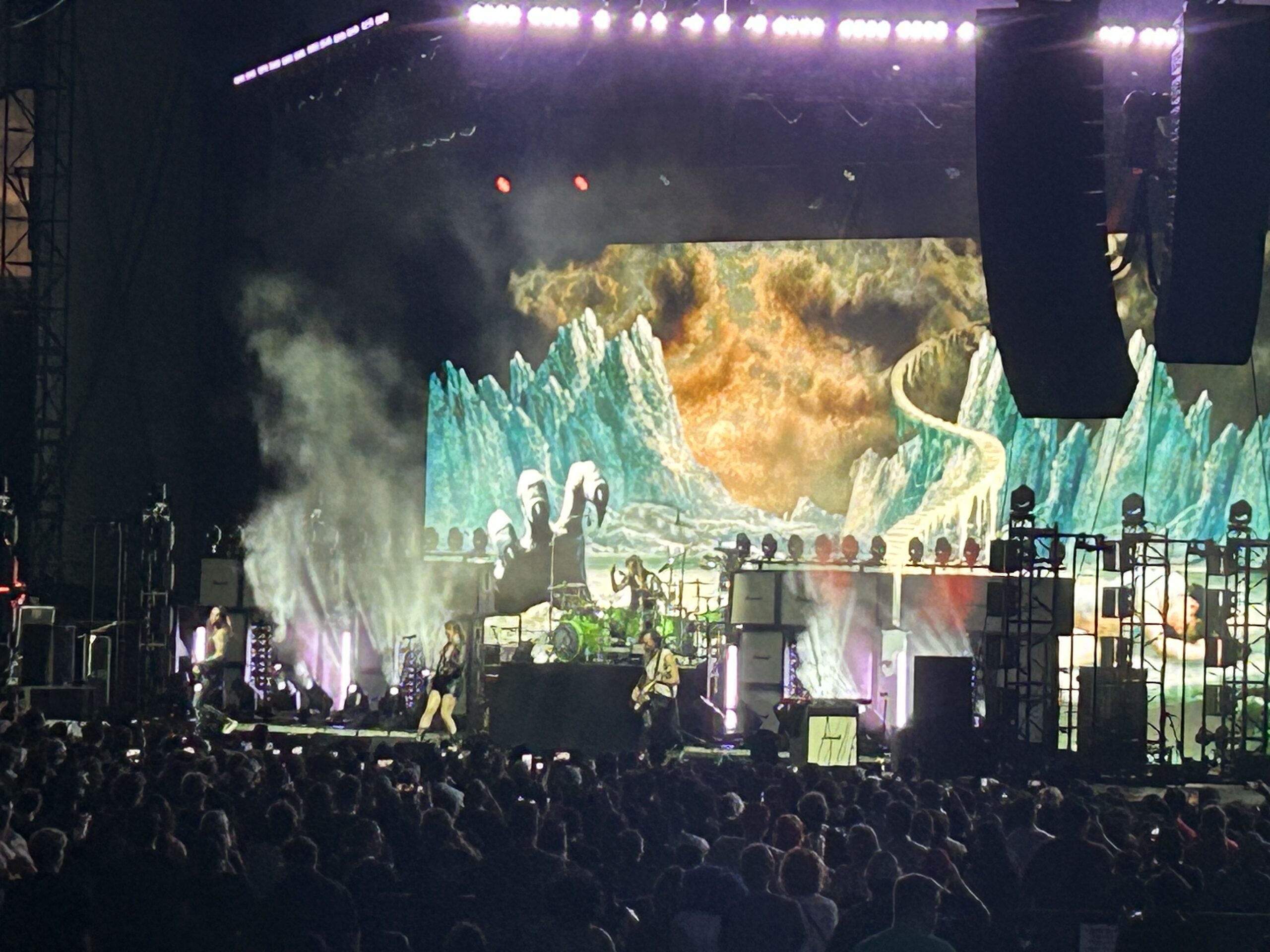
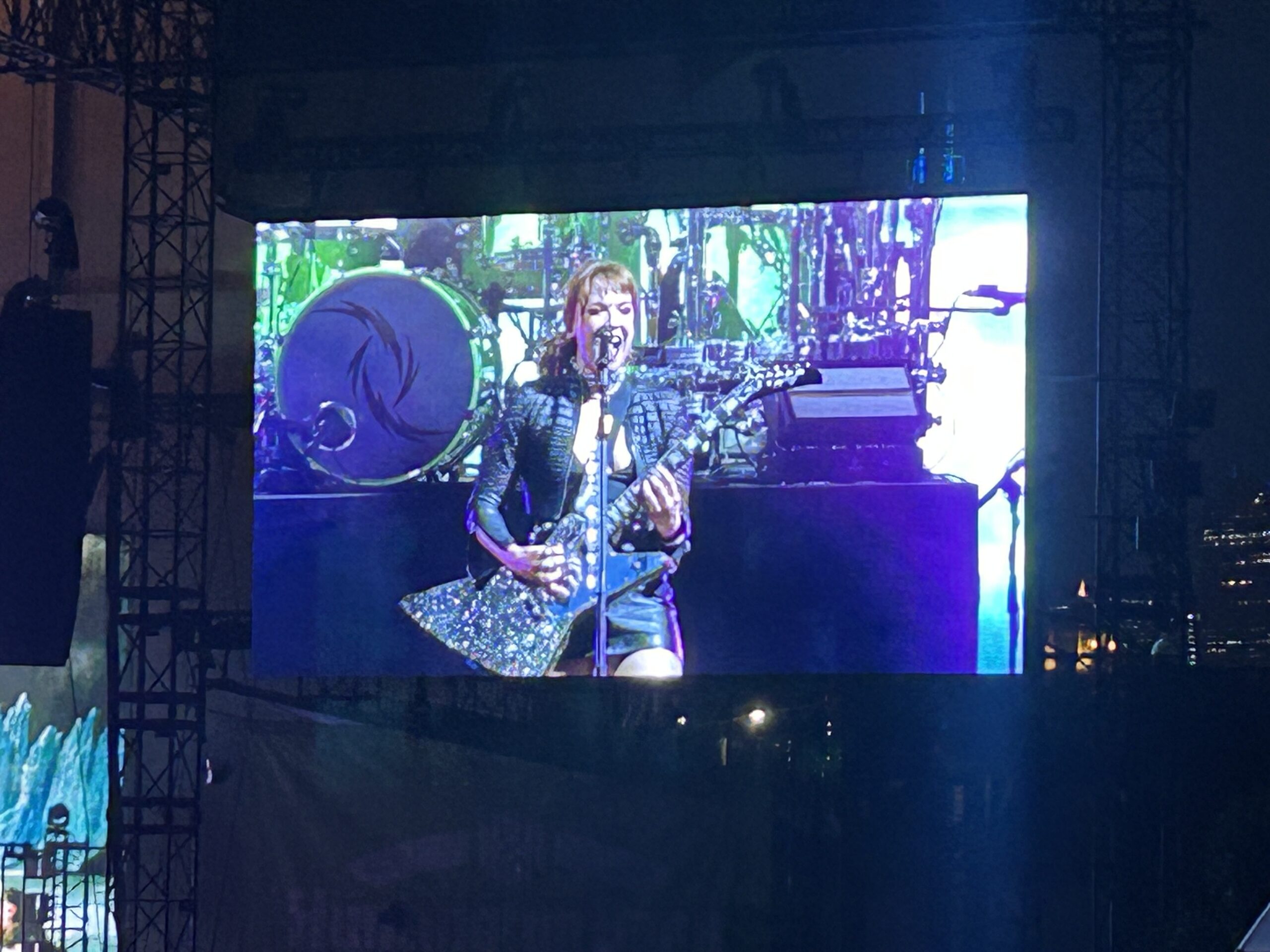
Speaking of vocal chops, Lizzy Hale of Halestorm has enough of them to power a land-mover. Halestorm put on a powerful set of raging metal tracks, most of them about crazy sex, bad love, good love, and weird love. Their wall of Marshall amps was also impressive.
Halestorm performing in the setting of your next D&D campaign.
The opening track alone was stunning, with Hale belting out her vocals so loud and proud (with just simple keyboard chords behind her) that I thought they were doing an obscure soul or gospel cover. Ms. Hale could release a soul album if she wished (and I’m surprised she hasn’t). Give her a horn section and a funky rhythm duo and you’d have a winner.
It was good to see a wide age-range of metal fans at this show. I saw plenty of eight-year-olds and a couple six-year-olds as well. An adorable girl was head-banging and dancing near my stepdaughter and I through all three sets while her parents lounged nearby. “That kid rules,” I said. My stepdaughter agreed. The future of metal is assured.
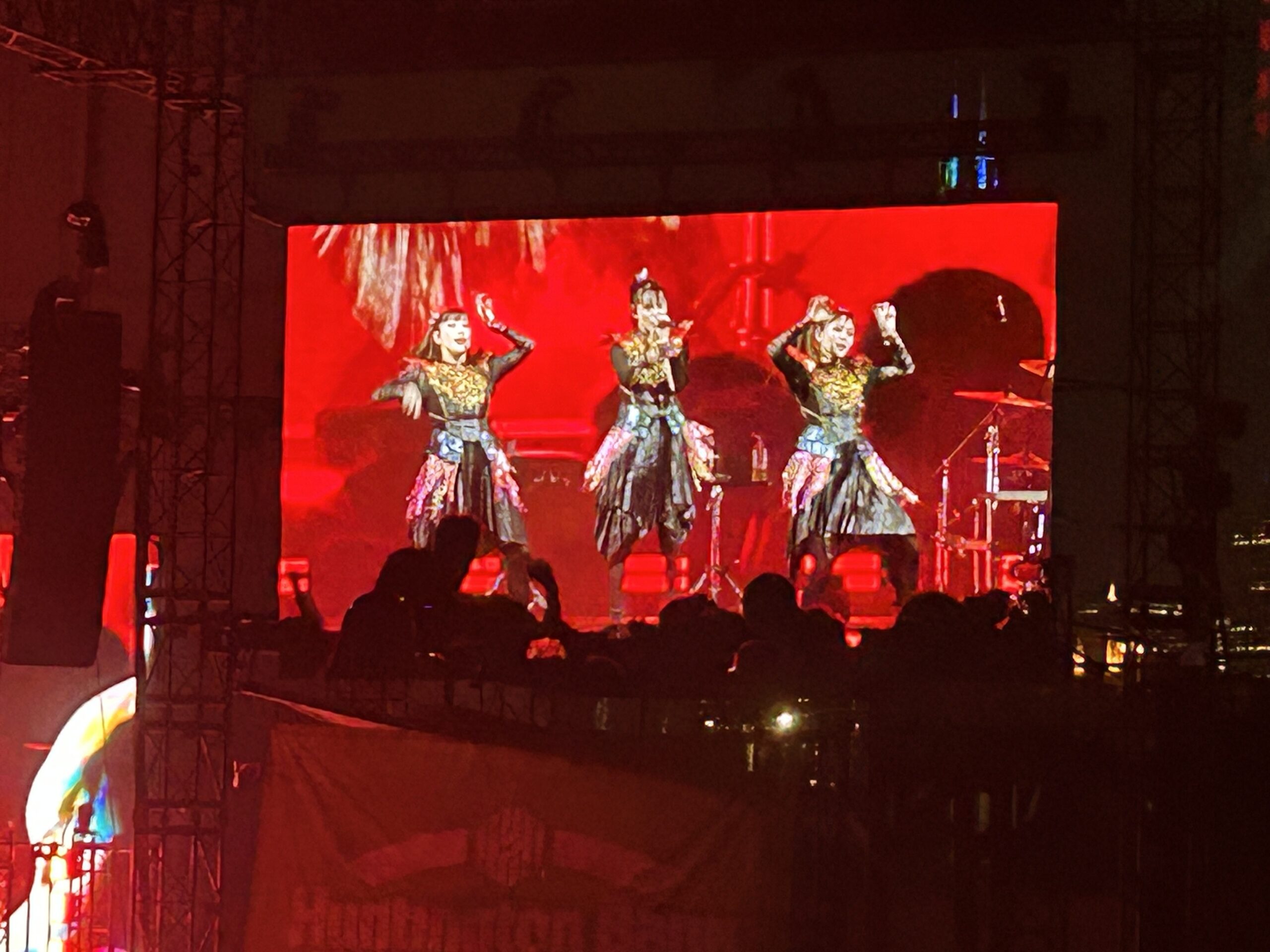
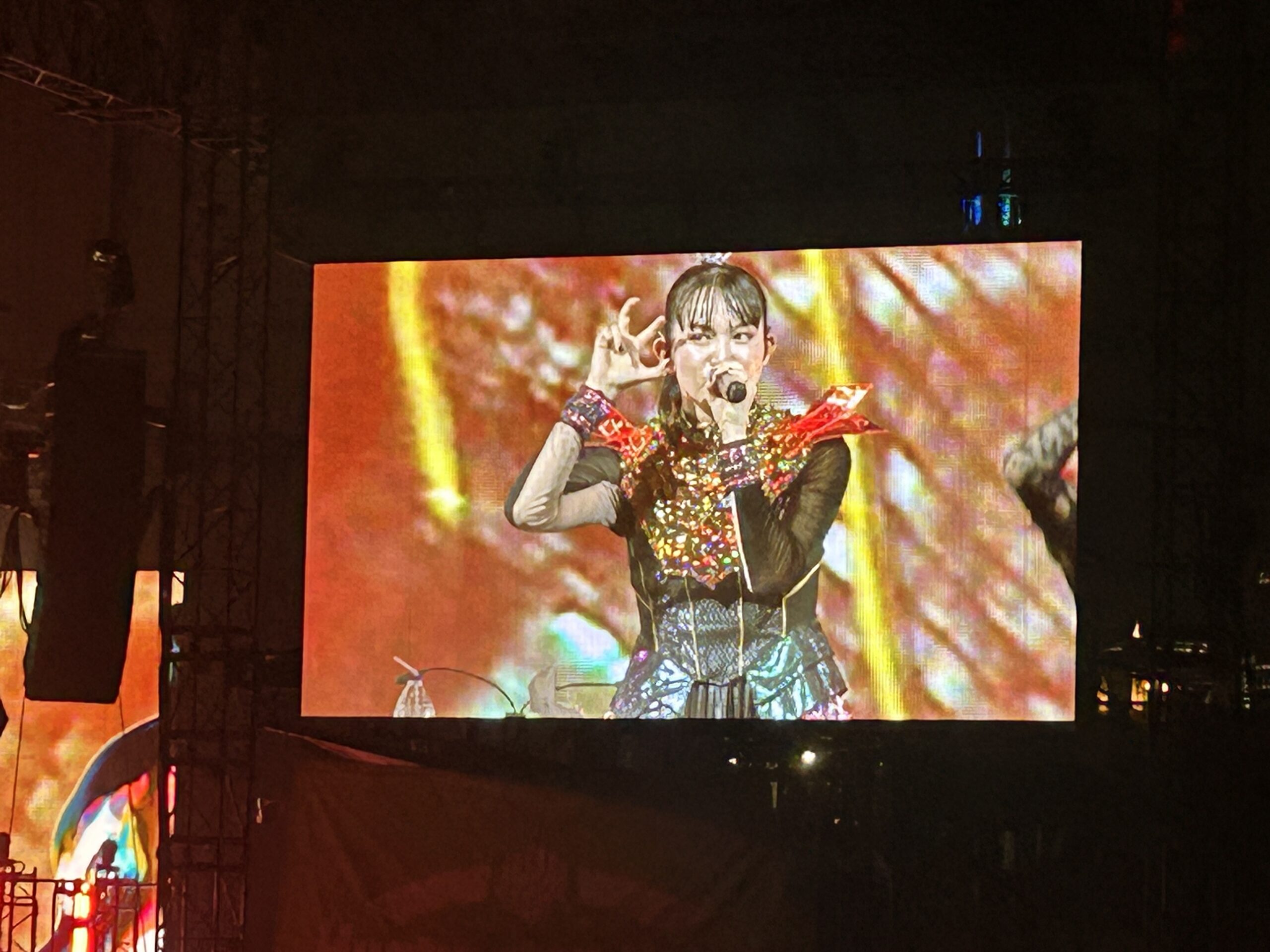
Many of those kids, and plenty of adults, were there for Babymetal – the Japanese metal giants who haven’t been kids for a while now and are still creating a lot of interesting spins on the metal genre.
They came out to a roaring crowd, with their backing band, KAMI, delivering wild thrash metal riffs that were probably causing waves on the nearby boat harbor. “Megitsune” was a big hit only two songs in, and “Song 3” even included a story about the three singers using magic to scare off a giant bear.
A big surprise for me (but probably not for longtime kawaii-metal / “cute metal” fans) was their song “Sunset Kiss,” which, somehow, combines metal with Japanese city pop (a genre of which I am rapidly becoming a fan). The guitar solo in it is also a stunner.
“METALI!!” had the mosh pit and crowd surfers happy, and “RATATATA” was another fan-favorite that had everyone cheering. Of course, “Gimme Chocolate!!” closed the set and is still the best (only?) metal song about how good chocolate is.
Su-Metal grabbing our attention and not letting go.
They came back with the delightfully named “Headbangeeeeerrrrr!!!!!” and “Road of Resistance.” The crowd was still buzzing afterwards, and I saw a good number of kids still bouncing (and one zonked out from so much head-banging) as we left. It was a fun night. Metal crowds are often good crowds with a lot of community in them. This one was no exception.
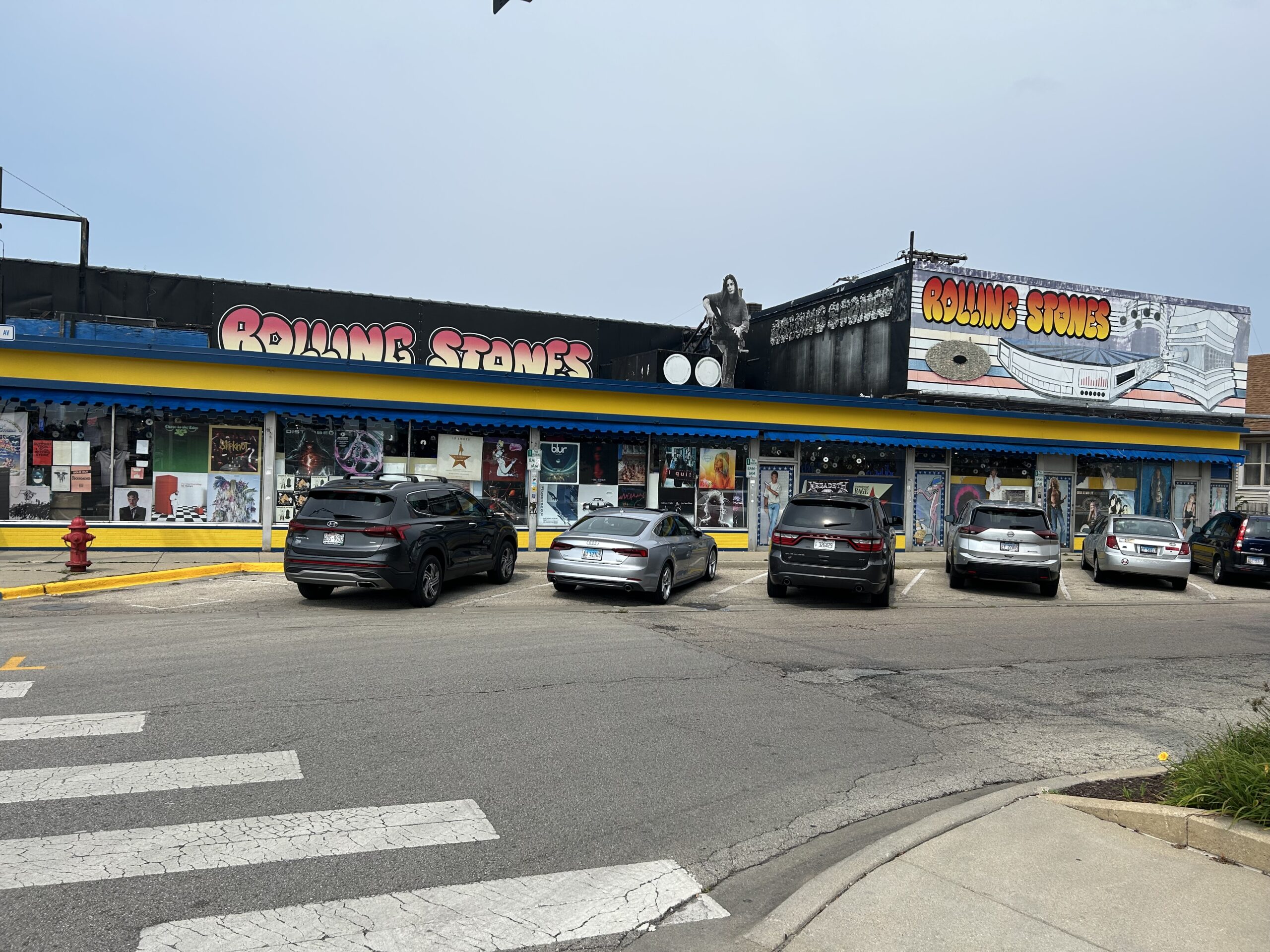
Located at 7300 West Irving Park Road, Rolling Stones is a massive store featuring a ton of great stuff. The place is almost overwhelming. I mean, you walk in and this greets you.
There’s an entire wrecka stow behind all this. I immediately saw a large section of rare soundtracks on CD as soon as I walked in, so I knew I was in a good place. The soundtracks led to world music, which led to blues, then to country, and the genres kept going around the perimeter of the store, eventually reaching the impressive metal and industrial selections.
Next to this is an odd section titled “Oldies,” but it’s not racks of 1940s and 1950s pop hits. It’s a weird mix of any genre or album seemingly released before 1990.
You see a lot of soul and R&B there (Etta James, Al Green, Marvin Gaye), but also records by New Order, Midnight Oil, Missing Persons, NRBQ, and more. I had made it to this section when my stepdaughter walked up to her mother and, somewhat stunned, said, “He’s not even to the rock section yet.” That takes up a good chunk of the middle of the store.
I walked out of here with a great score of various genres.
Be sure to stop by Rolling Stones if you’re in the northwest part of the city. Just be sure to give yourself extra time in your schedule. You’ll need it.
The cover image of Tokyo Tea Room‘s new album, Feel Forever, is, if you ask me, perfect for the sound of the record. You might look at it and think, “It’s just a photo of crumbled aluminum foil.”, but after you hear the dreamy, soulful psych-pop of Feel Forever, you think, “Oh yeah, I get it.”
Sam Teather‘s opening drum roll of “Hypnotised” is a perfect start to pretty much a perfect record. Beth Plumb‘s vocal style is like hearing dandelion seeds floating on summer winds, and the rest of the band (guitarist / producer / songwriter / jack-of-all-trades Dan Elliott and bassist Ben Marshall) groove like they’ve been doing it since the mid-80s. “Eyes Off You” is a love song you’ll put on every mix you’ll send to a lover from now until the end of time. “Leave You” has Plumb wanting to stay with a lover a bit longer because returning to the rat race is just…so…boring.
“All Night” continues this theme (with a shimmering groove) of wanting to extend the joy just another night more instead of calling it quits. The slow, smooth sound of “Feeling High” is great, with Teather putting down tight, simple jazz beats and Elliott’s synths and keys acting as icing on Plumb’s vocal cake. Marshall shines on “Always in the Sun” as his bass dances along like a happy cat and the band shows off their love of soul.
Elliott’s guitar on “You’re Mine” moves from desert rock to jazz with ease. “Temporary Love” has Plumb wanting a one-night stand to become a several-night stand at least, and “Last Time” has her wanting to seize the moment with a lover before its over and they go their separate ways. “Slip Away” floats us to bed as Plumb encourages us to “Stay inside, the world outside can wait.”
Getting back to the cover image, Feel Forever is as shimmery and reflective as the pictured aluminum. It’s also just as tactile and malleable. You feel it when you hear it as it wraps around and forms to you.
Françoise Hardy is one of the queens of yé-yé – the French pop music with slight psychedelic flair that charmed the world in the 1960s. En Vogue Best of 1962 – 1967 doesn’t encapsulate all of Hardy’s career, but it does collect twenty-four of her best tracks from a five-year period in which she was one of the voices of the generation who would protest the status quo.
“Tous Les Garçons et Les Filles” (“All the Boys and Girls”) has this haunting sound to it with Hardy’s voice echoing over simple beats and guitar and not-so simple bass grooves. “Le Temps de L’Armour” (“The Time of Love”) ups the fuzz a bit and could’ve been a Bond film theme in another life. “Le Premier Bonheur du Jour” (“The First Joy of the Day”) has a bit of a melancholy feel, leaving you wondering if Hardy is feeling joyful, or if she’s trying to convince herself that she is. “J’aurais Voulu” (“I Would’ve Liked To”) blends guitar and soft string instruments well.
“Pourtant Tu M’aimes” (“Yet You Love Me”) has a Phil Spector “wall of sound” vibe with the big instruments and backing vocalists behind Hardy’s breathy vocals. The deep piano and hand claps of “Et Même” (“And Even”) keep up this big, bold sound balance with Hardy’s soft voice. “Mon Amie la Rose” (“My Friend the Rose”) almost sounds like an Ennio Morricone song with its use of vocal sounds in the background, Spanish-tinged guitar, and Hardy’s voice drifting like dust across the land.
“Je N’attends Plus Personne” (“I’m Not Waiting for Anyone Anymore”) has Hardy a bit angry (as evidenced by the fuzzy guitar and frantic strings) and punching above her weight with her bold vocals. It’s a nice contrast with the next track, “Je Veux Qu’il Revienne” (“I Want Him to Come Back”), in which Hardy is tired of waiting for her lover to return. It’s a fast-paced rocker. “La Nuit Est Sur la Ville” (“The Night Is on the City”) is a tender ballad.
“DisLui Non” (“Tell Him No”) is funky and fabulous. “All Over the World” is the lone English track on the compilation (which is fine with me, give me all the French stuff!). “L’Amitié” (“Friendship”) is almost a lullaby. Hardy’s vocals on the chorus of “Le Temps des Souvenirs” (“A Time for Memories”) grab your attention and don’t let go.
Other standouts on the collection are “La Maison Où J’ai Grandi” (“The House Where I Grew Up”) with its peppy acoustic guitar chords, the soaring “Je Changerais d’Avis” (“I Would Change My Mind”), and the folksy “Au Fond du Rêve Doré” (“Deep in the Golden Dream”).
It’s a lovely collection from a lovely chanteuse and a great introduction to her work.
Twenty years after forming, A Shoreline Dream enters its anniversary year with ‘Legacy’, the new single released via Latenight Weeknight Records, which finds the band reflecting on the time, choices, and sacrifices behind one of Colorado’s longest-running independent music projects.
A sludging, bass pumping song that explodes with a huge chorus of cascading guitars and vocals that match that reflection, its shoegaze chant reflects on all the time that has passed. Here, “Legacy, your legacy instead of it” lyrically reflecting the thoughts that which has been sacrificed – so many of the normal everyday life milestones – to instead fine tune the nearly 120 tracks the band has now released throughout their history. A tragic yet rewarding legacy to leave behind.
Formed in 2005 and based in Barnum, Colorado, A Shoreline Dream is a duo of multi-instrumentalist and vocalist Ryan Policky and guitarist Erik Jeffries. For just over two decades, Policky and Jeffries have built a catalog approaching 120 released tracks while developing a sound rooted in shoegaze, psychedelia, post-punk, and expansive guitar-driven experimentation.
Approaching the 20th anniversary of their debut album ‘Avoiding the Consequences’, they look at that history from a deeply personal perspective. Years spent writing, recording, producing, and refining A Shoreline Dream’s music have often meant choosing the demands of the creative process over many of the conventional milestones of everyday life. The song considers what remains when so much of a life has been devoted to making music, and whether the work itself ultimately becomes the legacy.
The release comes during one of the band’s most prolific periods. Rather than treating 2026 as a year of reflection, A Shoreline Dream committed to releasing singles every month, while developing new material towards ‘Waiting’, the band’s second full-length album of 2026, which will include nine tracks.
Their current creative roll follows a significant period of collaboration with Ridefrontman Mark Gardener. Through A Shoreline Dream’s partnership with Shameless Promotion PR, Policky and Gardener connected for a series of recordings that resulted in five co-produced and performed songs, the most recent of these appearing on the album‘To Where They Have Gone’, released in February.
That relationship is part of A Shoreline Dream’s love affair with the UK music community. The band has worked extensively with Ulrich Schnauss and has also collaborated with members of Engineers, Chapterhouse, Rocket Girl Records, and mastering engineer Mark Kramer (Urge Overkill, Bongwater, Shimmy Records).
“2026 has been the year of true sonic inspiration, and the first time I’ve found myself in a constant music writing mode. After working with Mark Gardener, my mind has been humming melodies to me daily,” says Ryan Policky.
That renewed creative momentum has also been shaped by the world outside the studio. The response has been to make music that provides an alternative to that noise: music that is melodic, heavy, expansive, and immersive.
“It’s been a brutal human climate, and the distractions are so overwhelming in the media / toxic social media world. I’m f’ing over it. I just want explosive and melodic tunes to distract from this insane world, and these songs are exactly that,” says Ryan Policky.
“The tales of dealing with a world in chaos I hope resonate with all those out there looking for new musical vibes and explosive soundscapes. We have come back to the original feeling of A Shoreline Dream creating melodipsych shoegaze to celebrate this massively long journey.”
‘Legacy’ arrives not as a retrospective statement, but as a marker of where A Shoreline Dream stands now. Policky and Jeffries have maintained their creative partnership through changing musical landscapes and an evolving industry. Their response to reaching the 20-year milestone has been to keep creating at an increasingly intense pace.
The result is a band looking back without standing still. ‘Legacy’ acknowledges the cost of the journey while ‘Waiting’ and the continuing 2026 release campaign point firmly toward what comes next.
‘Legacy’ is now available fromdigital music platforms, includingSpotify,Apple MusicandBandcamp.The band’s second album of 2026, ‘Waiting’, will be released on October 16th.