It’s time for my annual review of my favorite albums of the previous year. Who made the top 25 (or 40+) albums I reviewed? Read on!
#25: GoGo Penguin – Necessary Fictions
This is a solid jazz / prog album full of great beats and slick piano work. It was a pleasant surprise to discover it and this band last year.
#24: Beta Voids – Scrape It Off EP
This is a wonderfully nuts punk EP with songs about women kicking ass, people named Alan, and how much toxic masculinity sucks. A full LP from Beta Voids is in the works, so watch out before they run you over and laugh on the way out of town.
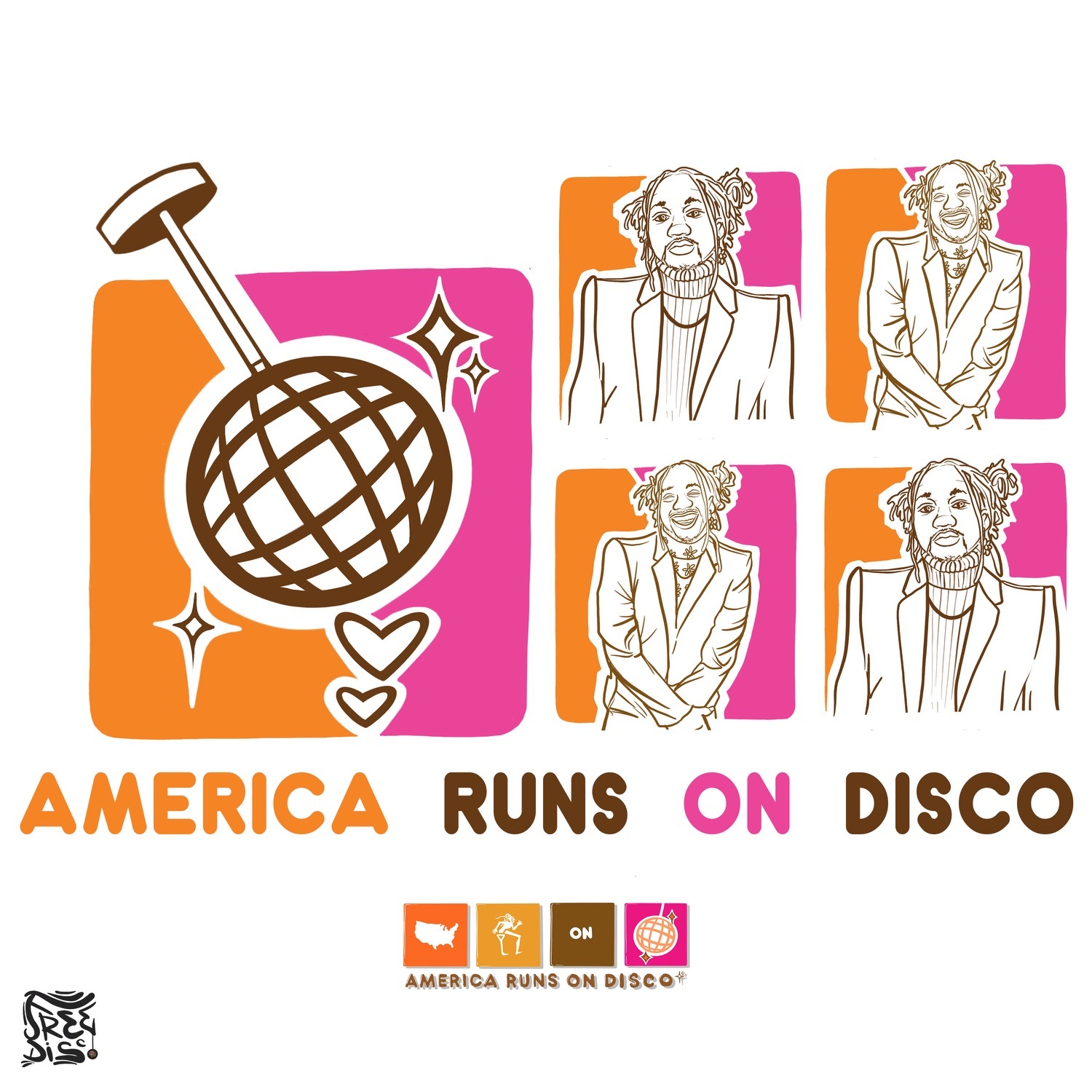
#23: Ric Wilson – America Runs on Disco EP
Speaking of good EPs that came out last year, here’s another. Ric Wilson is still somehow a secret force despite being a top-notch producer, songwriter, rapper, and cheerleader for the overly maligned city Chicago (Don’t believe what you hear. Go spend a couple days there, especially in the summer.). This EP is funky and joyful, which was exactly what we needed when it was released and still need right now.
#22: Bonnie Trash – Mourning You
On the opposite side of the spectrum, here’s an album about grief that’s one of the heaviest records of the year. The lyrics cut deep if you’ve lost a loved one, or even witnessed someone’s grief from afar.
#21: Dusty Rose Gang – A-One from Day One
Just when you thought rock might be taking a vacation for a little while, along comes this quartet to deliver one of the best straight-up rock records of 2025.
Take piano from cool jazz cat Joe Alterman and mix it with beats, bass, samples, and loops from Mocean Worker in a tribute to a late jazz and soul legend, Les McCann, and you get a downright groovy record – Keep the Line Open.
Starting with McCann’s high-pitched, hysterical laugh on “I Love It!, I Love It!, I Love It!,” Alterman (who counted McCann as a mentor and friend) and Worker have a blast right away, zipping along city streets (Are those traffic and train samples I hear?) with the windows down and at least three pretty ladies in the back seat. Worker’s bass line on “Yay Yay Yay” is designed to make you strut, and Alterman’s piano is designed to make you dress sharp for the evening.
On “Burnin’ Coal,” McCann tells a story of how he paid an announcer fifty bucks to introduce him with grandeur at an early gig in California, and then Alterman and Worker slide into a sweet groove complete with samples of ladies cheering, clapping, and stomping in the background. “Never have I seen a tuning fork ever,” says McCann as he talks with Alterman on learning how to play on and out of tune piano. “I never knew the difference,” he says, and then “Gimme Some Skin” breaks open with one of the happiest grooves on the record (and that’s saying a lot, considering the whole album is a happy delight) as Alterman rips on his electric piano.
“Circus Going Backwards” is a smoky, mysterious number. How can it not be with a title like that? “Get This to the People” could’ve been a hip hop jam in the golden era of 1990s rap (and still could be – someone needs to get on this). “Moses Gonzales” is so smooth that you could roll marbles across it in a straight line. “Lemme Tell You Somethin'” thumps and bumps in all the right spots.
The album closes with “Wouldn’t It Be Loverly / Les Has the Last Word” (as he should) – a great track of simple honkytonk piano from Alterman and a recording of McCann encouraging him (and us) to continue learning and growing.
Earlier this year, “Americana darling” (Bandcamp) Valerie June released her new album, Owls, Omens, and Oracles, via Concord to high acclaim. NPR Music deemed the album “inspiring…music that’s bringing people together,” while Paste described June as “one of roots music’s premiere cosmic travelers.” Today, June unveils a new single, “Runnin’ and Searchin’,” accompanied by a visualizer filmed by Dr. Ietef Vita in Big Sur, California.
Owls, Omens, and Oracles was a means for June to explore the discovery of a glimmer of hope in challenging times. “Part of the reflection is realizing that we are all oracles who write the future with every choice we make throughout the day,” June explains. “To write about our future, we must know something of the past. From heartbreak to poverty, oppression, injustice, failures, and pain, we all experience loss. ‘Runnin’ and Searchin” is a song that encourages us to use our setbacks as a doorway as we steadily step into the uncertain and unknown path that lies awaiting us with every tomorrow we’re gifted.”
June’s singular sound and energy is an undeniable north star. Her Tennessee twang grips listeners, with her expansive sound growing from her psychedelic folk, indie rock, Appalachian, bluegrass, country soul, orchestral pop, and blues root system. Halfway through a decade of immense and rapid global change, Valerie asserts a multidimensional Blackness steeped in laughter, truth, magic, delight, and interdependence.
“The resolutely upbeat Valerie June” (New York Times) is an author, poet, Grammy®-nominated singer-songwriter and three-time Americana Music Honors and Awards nominee. She’s been praised by Bob Dylan and written music for Mavis Staples. She is the subject of an exhibit at the National Museum of African American Music (NMAAM) in Nashville featuring artifacts from her storied career. She has shared the stage with Willie Nelson, Dinosaur Jr., John Prine, Tyler Childers, Brandi Carlile, Elvis Costello, Robert Plant, Meshell Ndegeocello, and well beyond.
Following a run of shows in Tokyo and the southwestern United States, this fall and winter, June continues on her Big Ole Worldwide Tour.
Valerie June Big Ole Worldwide Tour Dates Sat. Nov. 15 – Barcelona, ES @ Feroe’ 25 Festival Sun. Nov. 16 – Valencia, ES @ 16 Toneladas Tue. Nov. 18 – Madrid, ES @ Teatro Magno Wed. Nov. 19 – Bilbao, ES @ Bilborock Thu. Nov. 20 – Santiago de Compostela, ES @ Outono Códax Festival 2025 (Sala Capitol) Sun. Nov. 30 – Paris, France @ New Morning Mon. Dec. 1 – London, UK @ EartH Theatre – SOLD OUT Tue. Dec. 2 – Brussels, BE @ Orangerie Botanique Wed. Dec. 3 – Amsterdam, NL @ Zonnehuis Thu. Dec. 4 – Rotterdam, NL @ Bird Fri. Dec. 12 – New York, NY @ Town Hall Thu. Jan. 15 – Mon. Jan. 19 – Puerto Aventuras, Q.R. @ Wilco’s Sky Blue Sky – SOLD OUT Wed. Feb. 11 – Pittsburgh, PA @ Carnegie Lecture Hall
Bassist/producer Mocean Worker (aka Adam Dorn) and pianist/composer Joe Alterman have come together for Keep The Line Open, a funky, feel-good tribute to the late soul jazz legend Les McCann. Out September 26 via MOWO! Inc., the nine-track collection taps into the genre-blurring spirit that defined McCann’s music, as well as his influence on Dorn and Alterman, who knew him as a mentor, collaborator and close friend. With credits ranging from Eddie Harris and Ramsey Lewis to Hal Willner, Marcus Miller, and Brian Eno, Dorn and Alterman fuse their distinct artistry into an electrifying set that celebrates McCann’s essence while standing on its own as a joyous, party-starter. Keep The Line Open‘s first single, “Yay Yay Yay,” is out today (listen/share).
Dorn and Alterman created Keep The Line Open by melding sampling with live instrumentation to pay homage to an era when the groove reigned supreme and the vibe was decidedly danceable. It’s an album with that ‘live thing’ without actually being a live album. It invites the listener to shake their hips, stomp, shout, and exuberantly raise the collective vibration. Drawing from years of conversations recorded for posterity, saved voicemails and other aural documents of McCann, they’ve woven his voice, laughter, and ever-present sense of humor throughout the album, which threads in and out of the tracks. The infusion of McCann’s raspy timbre is the bond that holds the music together. “We wanted to make a record that harkened back to an era, but use the technology of the current era that says, ‘here’s a party and you can come to the party and not feel like you are being preached at…’” explains Dorn. Alterman concurs: “The idea of music making people feel good and enjoy themselves is one of the things Adam and I definitely have in common. It’s how we got into the music and live with the music, and that’s a point of this project for sure. Hopefully you’ll listen to it and think it’s a live party.”
Dorn’s relationship with Les McCann began through his father, the legendary Atlantic Records’ staff producer Joel Dorn, who worked closely with McCann on several albums, including rare-groove classics like Layers, Invitation to Openness, and the multi-platinum Swiss Movement, which also featured electric saxophone pioneer Eddie Harris. As a kid, the younger Dorn would often overhear long conversations between his father and McCann who shared a deep friendship. As he grew older, he himself began a profound relationship with McCann via extended phone conversations. It led McCann to hire Dorn, an accomplished bassist in his own right, to be part of his rhythm section on live dates. Alterman, meanwhile, started out as a devoted fan of McCann who received the rare opportunity to open for one of his heroes at The Blue Note. The two connected instantly, forging a friendship that lasted for years, primarily through near daily, hour-plus phone conversations. Although plans to record and tour together never materialized due to McCann’s health issues, they did co-write the song “Don’t Forget To Love Yourself.” Alterman would later release Joe Alterman Plays Les McCann: Big Mo & Little Joe, a heartfelt tribute to his mentor and friend. It was ultimately McCann’s passing that brought Dorn and Alterman together. They had both become aware of each other through their independent friendships with McCann who would mention each of the artists in his conversations with the other. Following his death, they’d finally meet and quite organically the idea of making a record of original material inspired by McCann was hatched. Dorn began writing sections of music, creating beats and rhythmic ideas that he’d send to Alterman over which he’d improvise. Dorn would then take those parts and shape them into songs. “It’s all constructed to sound organic, but if you saw the sessions, they look like a Jackson Pollock painting,” recounts Dorn. “It’s like someone who knows how to work with samplers that’s actually a jazz musician. Joe would solo over little ideas and I’d make big arrangements out of them.” Alterman adds: “I’d send Adam four or five solos and he’d piece together the catchy parts to make it what you hear.” The result is an album that is immensely funky (“Gimme Some Skin“), with nods to Latin grooves (“Moses Gonzalez“), and always heavy on the backbeat (“I Love It!, I Love It!, I Love It!“). There are times on Keep The Line Open where the listener will feel as though they are being taken to church (“Yay Yay Yay“), and at other times being taken on a trip to Haight-Asbury in the ’60s (“Circus Going Backwards“), and yet simultaneously the music to feel modern and of the moment (“Lemme Tell You Something“). There is a Les McCann cover tune (“Burnin’ Coal“), there is a moment for Alterman to thrill with his considerable stride piano skills (“Isn’t She Loverly“), and throughout there is Les, commenting on the proceedings with his inimitable wit, humor, and loving nature, making it all seem like it is being played just as he’d imagined. The limited-edition, 180-gram orange vinyl also includes a 10-page insert with extensive liner notes by Alterman, Dorn and Michael Smith, author of In with the In Crowd: Popular Jazz in 1960s Black America, alongside rare and previously unpublished photos of McCann by Sharon Josepho. And while Les McCann is the driving force, the entire spirit of his era, from Ramsey Lewis to Ahmad Jamal, Eddie Harris to Cannonball Adderley, lives in the music. It’s this inspiration that guides Mocean Worker and Joe Alterman through each of the nine tracks. Keep The Line Open is a musical celebration that, like Les McCann himself, makes you feel alive and happy and ready to party.
Part-classical, part-jazz, part-krautrock, part-techno, and part-funk, GoGo Penguin‘s newest album, Necessary Fictions, is a neat blend of styles that’s difficult to pin down, but an enjoyable listen. The band (Nick Blacka – bass, Chris Illingworth – piano, and Jon Scott – drums) explore some new territory on their seventh record, mainly synthesizers.
“Umbra” is a bumping track with rich bass and subtle synths to evoke a slight sense of darkness, but not skimping on creativity. Illingworth’s piano on “Fallowfield Loops” is a delight to hear, as it sounds like he was having a fun time playing it. “Luminous Giants” features a rarity on a GoGo Penguin album – vocals. They’re provided by singer-songwriter Daudi Matsiko.
“What We Are and What We Are Meant to Be” is a standout, with the band embracing synths and creating neat textures suitable for a new Blade Runner movie. Blacka’s bass almost becomes vocals on “The Turn Within.” Apart from having a cool name, “Living Bricks in Dead Mortar” has some of Scott’s hardest drumming on the record, swelling up with the synths to create a brief industrial riff. “Naga Ghost” refers to a pepper that builds in heat when you eat it, and the track builds in speed and intensity as it goes along.
Rakhi Singh‘s guest violin on “Luminous Giants” is beautiful. “Float (Loi Krathong, 2003)” is a bass-led track about Blacka attending a floating lantern festival in Bangkok. The eight-piece string ensemble Manchester Collective joins the band on “State of Flux” – a cool, sharp track in which GGP rocks out a bit while the strings dance around them. The closing track, “Silence Speaks,” takes the band, and the album, from electronica to acoustic and brings everything to a nice close.
It’s a lovely record, and I hope GGP continues this trend of blending jazz with electronics. It’s a good mix.
Shrunken Elvis is a Nashville-based trio born from long European drives, cold winter jam sessions, and a mutual love of genre-defying sound exploration. The group unites three seasoned musicians—Spencer Cullum, Sean Thompson, and Rich Ruth—each bringing a distinct musical background to a shared creative space that prizes intuition over ambition.
Cullum, a pedal steel guitarist originally from East London, has recorded with artists like Angel Olsen, Lambchop, Miranda Lambert, and Billy Strings, while also releasing two solo LPs of folk-psych compositions on UK label Full Time Hobby. Thompson, a Nashville native, emerged from the city’s DIY scene playing in his first band Gnarwhal, and later helping to form other bands including Promised Land Sound. He’s toured and recorded with Margo Price, Skyway Man, Erin Rae, and others. Known for his immersive solo project Rich Ruth (Third Man Records), Michael Ruth blends spiritual jazz, ambient, and synth-infused post-rock into meditative and expansive compositions.
Now all based in Nashville, the trio thrives within the city’s supportive and exploratory music community. That environment has allowed them to forge a path that veers from Music City’s more traditional output, offering space to experiment and innovate freely. You can hear the fruits beared from this path on the upcoming self-titled album Shrunken Elvis, announced today for a September 5th release via Western Vinyl. Pre-order the albumhere.
The stunning first single “An Old Outlet”is a track that zeros in on the junction point between genres such as kosmische, jazz fusion, electronic, and ambient — collective loves of the three members. Check it out on YouTube.
Recording their debut album presented a unique challenge: to preserve the energy of their live three-piece dynamic without over-cluttering the arrangements. Their goal wasn’t to make an instrumental album that highlights individual prowess on pedal steel or guitar—but rather to construct a musical terrain where all elements coexist, each voice contributing to something entirely new. Embracing a philosophy of “no goals, just ideas,” the group let the music unfold naturally.
Mixed by Jake Davis (William Tyler) and featuring cover art by UK psych-folk artist Max Kinghorn-Mills (Hollow Hand), the debut Shrunken Elvis record is music made without expectation—but full of purpose. It’s the music they’ve always wanted to make: immersive, intuitive, and deeply alive.
Shrunken Elvis’s music exists in a naive, open-ended state—unconcerned with outcome but guided by deeply honed instincts. Having spent much of their careers as side musicians, this project represents a rare opportunity to create purely for the sake of collaboration and curiosity. Influences range from Alice Coltrane, Michael Rother, and Pat Metheny to KLF, Ashra, and Can—along with visual and cinematic touchstones like ECM album art, Kurosawa, and Bergman. Ideas often emerged in old English pubs on tour and were carried into the studio with quiet urgency.
The group’s origins trace back to a 2022 European tour behind Cullum’s solo record. Long drives crammed into a VW Passat—traversing Germany, Belgium, Denmark, the UK, and Ireland—fostered a kind of creative incubator. With no fixed plans or agenda, the trio began crafting compositions using their compact tour setup of two guitars, pedal steel, and synths.
Their shared listening experiences on those journeys helped shape a collective sonic language, one that transitioned seamlessly into winter recording sessions back in Nashville. Gathered around a small fire heater in a shed studio, they captured that same spirit of spontaneity and collaboration in sound.
Somewhere between the late 1950s and the mid-1960s was an aesthetic of design that was known as the “space age bachelor pad.” It was partially inspired by James Bond films, speculation on a glorious, automated future that was to come after World War Two ended, and thrilling adventures in space exploration.
Of course, if you were going to live in a space age bachelor pad, you needed space age music to play on your hi-fi stereo, and that’s where Esquivel entered the scene. More of Other Worlds, Other Sounds is the sequel to 1958’s Other Worlds, Other Sounds, which blew people’s minds back then. More does the same with blends of Latin jazz, big band swing, beautiful piano work, and plenty of odd sounds that come out of nowhere.
“The Breeze and I (Andalucia)” is almost a John Barry Bond movie theme (Dig those horns!), but Barry is happily drunk and goofing around in the studio. The weird hand percussion and surf guitar on “Chant to the Night” are trippy compliments to the great trumpet playing on it. “Canadian Sunset” builds to a thrilling point and then drifts into comfortable warmth (or is it cool dark?).
“Street Scene” has plenty of low-end piano bass to get you prowling, while the middle keys provide sultry glances from across the road. Esquivel (and His Orchestra) does a fun, luxurious spin on the classic “I Get a Kick Out of You” with great piano flourishes. “Primavera” is a song you’ll think you’ve heard in hundreds of elevators, airports, and train stations…and you probably have.
“Street of Dreams” has sublime and subtle percussion behind Esquivel’s plucky piano work, and another trumpet solo that you can practically frame and hang on a wall. “La Mantilla” is layered with Latin acoustic guitar, piano riffs, and hand percussion, instantly transporting you to a place that only exists in dreams. Esquivel’s version of “One for My Baby (and One for the Road)” takes a song popularized by Frank Sinatra and makes it even woozier.
The percussion on “Dancing in the Dark” almost sounds out of whack, almost like Esquivel is playing piano in one room while a samba band plays in another and the recording equipment is set up in the hallway between the two rooms (and a jazz trumpeter is on the veranda outside). You’ll want “Snowfall” on your Christmas playlists this year and every year afterwards. It’s bright and perfect for a cozy night of snuggling in your satellite bachelor pad. The album ends with “Travelin’.” It’s a good finisher, as it’s perfect for putting on as you start on a new journey to some exotic place, even if it’s only a couple miles down the road.
This is a lounge classic, like all of Esquivel’s work, and shouldn’t be missed. Your date will thank you.
Today Thor & Friends announced their upcoming album, Heathen Spirituals, set for release on May 16, 2025, via Joyful Noise Recordings. Led by the legendary Austin-based percussionist Thor Harris (best known for his work with Swans and Shearwater), the project also shared a preview from the album — an excerpt titled “Anne Sexton’s Monocle” — accompanied by a new video.
Thor Harris is a prolific collaborator, having worked with an array of influential artists, including Bill Callahan, Devendra Banhart, and Shahzad Ismaily. Most recently, he toured with the experimental-rock supergroup Water Damage and performed at the Big Ears Festival in Knoxville—both as a solo artist and as part of various group projects. Thor & Friends embodies this intense spirit of collaboration; since we last heard them the adventurous instrumental project has grown from an intimate trio of mallet players to a minimalist orchestra.
The curious marimba rhythm that sets up “Anne Sexton’s Monocle” invites you in like a call to prayer, then puts you in a trance. As a variety of instruments weave in and out of the sonic spotlight, the constant melodic pulse propels into a cognitive crescendo of french horn, cello, violin clarinet, pedal steel, and more.Has everything changed or nothing at all? The enchanting instrumental, tracked live in an empty orchestra hall, seems a fitting tribute to Sexton, poet known for brave confessional verse.
About the excerpt and its full track “Anne Sexton’s Glasses,” Harris says:
Anne Sexton’s actual glasses are housed in a museum on the UT campus next to the auditorium where we recorded this album. This monstrous piece is a 10-note percussion exercise over a pentatonic scale. I play in odd meters because I am a child of prog rock. I apologize.
Like a scene from a dream, Thor Harris stood upon a crowded stage, 13 players deep: tapping, plucking, bowing, blowing lyric-less love songs to a grand auditorium of 325 shining red seats – without a soul sitting in any of them. This was the creation of Heathen Spirituals, the fifth recorded work by Harris’ adventurous instrumental ensemble Thor & Friends and the first that accurately resembles the skyward repetition of the Austin-based group’s live performances.
It’s a century-old concept: cutting a record in an empty music hall. Masterminded by intrepid producer and lifelong Harris collaborator Craig Ross (Patty Griffin, Spoon), Thor & Friends’ roster of musically accomplished misfits spent two days wired up, playing free-flowing meditational pieces on unamplified orchestral instruments inside Jessen Auditorium, a stunning Art Deco relic from the early days of the University of Texas’ Butler School of Music – the esteemed institution that Harris dropped out from decades ago.
A craftsman, artistically and otherwise, Thor Harris is master plumber, carpenter, and woodworker. In musical contexts, his name is often followed by the five words: “known for his work with,” having been a member of avant rock godheads Swans and high-minded indie favorites Shearwater, while also factoring into important recordings by Bill Callahan, Devendra Banhart, and Shahzad Ismaily. In many circles, Harris is equally well-known for being an openhearted mental health advocate with a devilish sense of humor and a penchant for entertaining social commentary (Harris’ “How to Punch a Nazi” instructional video got him famously banned from Twitter in 2017).
Heathen Spirituals, arriving May 16th, 2025, on Joyful Noise Recordings, contains three original pieces with a 35-minute runtime. The rhythmic repetition of opening seance “Anne Sexton’s Glasses” evokes a cognitive crescendo, while the spellbinding “Christmas Eve at the Wizard’s House” evokes a sense of weightlessness, sucking the listener up into the firmament then floating them back down. The crashing, choir-backed “Heathen Spiritual,” meanwhile, stirs a gorgeous requiem for a dying planet. In glorious fidelity, the sessions capture the instinctual purity of Thor & Friends’ live performances, which thrive on skyward repetition.
Lonnie Holley is singer, songwriter, artist, educator, and poet…and, surprisingly to me, a trip hop artist. I knew that his new album, Tonky (named after his nickname from growing up in and around honkytonks), would be full of gripping tales from his life and views on the current American landscape. I didn’t expect it to be layered with found sounds, electric beats, and trip hop touches.
The opening track, “Seeds,” is the longest at over nine minutes and has Holly telling about how fields he worked as a child until he was exhausted or often beaten so bad he couldn’t sleep. The string instruments strum out growing tension while simple synth chords are like the hums of spectres watching from the other side of the veil. “Life” is a short poem of hope with Holley encouraging us to use small actions to grow big change.
“Protest with Love” is the most punk rock song I’ve heard in a long while, and it’s wrapped in a lush trip hop track. “If you’re gonna protest, protest with love…Let love do its thing,” Holly advises. Loving thy neighbor, heck, just being nice, is one of the most rebellious acts you can do in 2025. In the jazz and post-funk (Is that a thing?)-inspired “The Burden,” Holley tells us all that it’s on us to remember those who came before and how we need to honor them (“The burden is like a spell that’s been cast upon you. Burdens of our ancestors to unravel and clarify in history.”).
“Let those who have ears, let them hear…We might not have it all together, but together we have it all,” Holley preaches in the beginning of “The Stars” — a powerful track about how people brought over on slave ships saw the same stars we now see, but how much have we progressed since then? The included rap by Open Mike Eagle is so slick it might drop you to the floor.
Holley makes sure you’re paying attention on the growling (and slightly funky) “We Were Kings in the Jungle, Slaves in the Field.” “Strength of a Song” has some of Holley’s strongest vocals on the record as he sings about finding hope and power in music. Near-industrial drums make “What’s Going On” sound like a roaring muscle car engine. “I Looked Over My Shoulder” is psychedelic jazz mixed with dark-wave synths.
“Wait a minute…” Holley says at the beginning of “Did I Do Enough?” Good heavens, haven’t we all thought that at some point — especially if you’ve been through a tragedy, or someone close to you has? The song is just Holley’s heartfelt vocals above ambient synths that build to gospel-like grandeur and it’s a stunner. “That’s Not Art, That’s Not Music” has Holley firing back the criticisms aimed at black music and culture upon their detractors.
The album ends with the hopeful “A Change Is Gonna Come,” but Holley asks, “Are we ready for something to happen?” One has to recognize the signs, when to stand up, and when to take flight. We have to be willing to accept change from divisiveness to inclusion. “How can I love God without loving you?” a woman asks not only herself, but also all of us. It’s the main message Holley wants to convey, and one we all must hear.
This is already one of the best albums of the year.