It’s a bit hard to describe Joshua Abrams and the Natural InformationSociety, but the best word is probably “minimalist.” They play an interesting form of minimalist jazz and low rock that’s centered around Abrams’ love and mastery of a three-stringed African guimbri lute. Their stuff can be both meditative and danceable. I first caught them at Levitation Chicago a while back, and they put on a good show then. It will be interesting to catch them in an outdoor venue this year at the Pitchfork Music Festival.
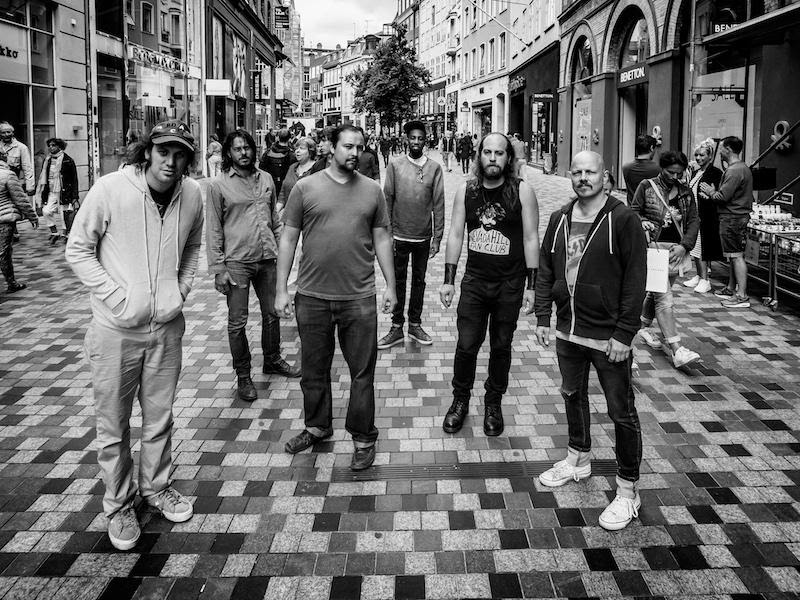
Blending members from Chicago, NYC, Texas, and Scandinavia, the Young Mothers have created Morose – a wild mix of hip-hop, jazz, and house music that hasn’t been heard since the likes of Digable Planets and Jurassic 5.
Starting with “Attica Black,” the sweet drum groove by Frank Rosaly leads into a sharp rap and downright fierce trumpet jam by Jawaad Taylor and wild saxophone by Jason Jackson that sounds like something off a rare Captain Beefheart record. Jackson’s sax is soulful and then sad and then angry on “Black Tar Caviar.” The track turns into a funky, crazy one in the second half, sounding not unlike a Faith No More tune. Jackson’s sax bubbles alongside Jonathan Horne‘s guitar and Stefan Gonzalez‘s vibraphone on the instrumental “Bodiless Arms.”
Chaos reigns on “Untitled #1,” which sounds like a drunk jazz band in a car wreck with a truck hauling a bunch of Theremins. I mean this in the best possible way. I actually wish it lasted longer, but “Jazz Oppression” is a fun follow-up and is probably one of the few songs that can induce a mosh pit at a jazz show. The title track is something as dirty and funky as a Jon Spencer Blues Explosion record, and Gonzalez’s vibraphone work on it is outstanding.
“Osaka” is another bizarre instrumental, but it’s tame when compared to “Untitled #2.” Remember that drunk jazz band in the car crash? Well now they’re fighting an army of killer robots. Again, I mean this in the best of compliments. “Shanghai” gets back to the band’s love of rap, but still drenches it in distortion, reverb, and sonic oddities.
It’s hard to describe Morose. The album’s title is also a bit of a mystery. The psychedelic jazz freak-outs on it are anything but morose. It’s an album that will get your blood pumping and freak you out a bit. It’s dangerous, and we always need dangerous music.
“A sound that blends free jazz and hip-hop, seeing no distance between them… Latin fuses with African fuses with European and on and on until there is no distinction. This uncompromising group of players delivers an unforgettable listening experience that listeners will doubtless be parsing for some time to come.” — PopMatters
“One of the most interesting and original acts in Texas — perhaps the entire planet,” — Austin Chronicle
Austin, TX musical iconoclasts The Young Mothers share a new track from their forthcoming sophomore album today in an interview with Austin Chronicle. Hear and share “Jazz Oppression” HERE. (Direct Soundcloud.)
PopMatters recently premiered album opener “Attica Black” HERE. (Direct Soundcloud.)
The band is currently in Europe wrapping up a summer tour before heading to Canada for a couple of shows. See current dates below.
Self Sabotage Records proudly presents Morose, the anticipated follow up by The Young Mothers, a juggernaut of a collective formed in 2012 and featuring a super group of heavy-hitters who have helped steer the direction of creative music in New York, Chicago, Texas, and Scandinavia.
Norwegian bassist Ingebrigt Håker Flaten (The Thing; Free Fall; Atomic) moved to Austin, Texas in 2009. He’d experimented with stateside living for a few years in Chicago before that, but the city of barbecue, food trucks, and outlaw country music has become his home base. Texas has a deep creative music history, but most Texas improvisers found their notoriety elsewhere, seeking to escape segregation and poverty for a chance to ‘starve a little better’ on the coasts. However, the Texas of 2018 is not the Texas of 1958 and the groundwork for this potent convergence was laid around a decade ago in Houston when Ingebrigt met and linked up with trumpeter/rapper Jawwaad Taylor (Shape Of Broad Minds, MF Doom), and what became a transliteration of his Chicago Sextet into a scrappy Lone Star variant called The Young Mothers has formed a group identity all its own and now has a second album under the belt (their first, A Mothers’ Work Is Never Done was self-released in 2014). Instrumentally The Young Mothers has some similarity with its Windy City relative – in addition to sharing drummer Frank Rosaly and Flaten, the vibraphone chair is held down by percussionist & diabolical vocalist Stefan González (Yells At Eels, Akkolyte), and Jason Jackson (Alvin Fielder, Pauline Oliveros, William Parker) on tenor and barry is their saxophone firebrand. Furthermore, the group features guitarist Jonathan Horne (Plutonium Farmers, ex-White Denim) and prolific wordsmith and improviser JAWWAAD on trumpet, electronics, and rhymes, and it is here that structural similarities between the Young Mothers and Flaten’s other folksy-modal projects end.
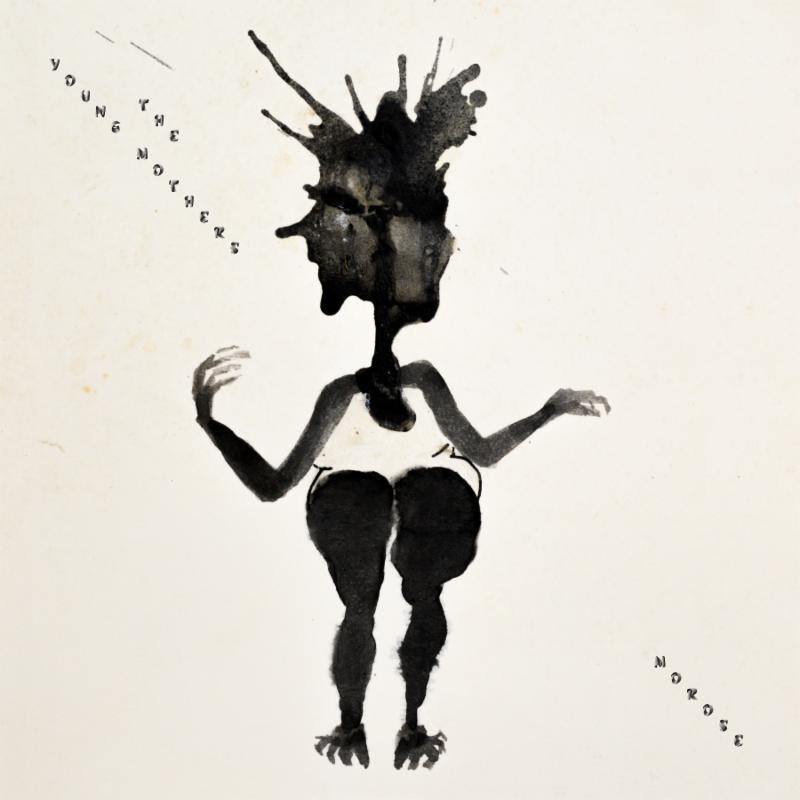
The Young Mothers was named after a Houston community project for teen mothers (Project Row Houses) that Flaten’s then-partner had been a part of, and while it may strike one as an odd moniker for a group that melds free improvisation, Tejano-inspired horn lines, the long unfurling electricity of surf rock, tough word-science and crust metal vocals, but relocating to a then-unfamiliar locale and birthing/raising a melange of sonic approaches into a working ensemble is not insignificant, if not quite actual motherhood. (On a side note; another strong connection to the Project Row Houses is the Houstonian artist and legendary sculptor Jesse Lott who made the beautiful album art!) Anyways, while they may have exhibited a homespun ricketiness in the beginning, through touring nationwide and after several festival performances and tours in Europe they’ve honed their sound into something truly their own, and one that’s not insignificantly comparable to historical melds in Scandinavian-American-World Music – the work of Don Cherry, Maffy Falay’s Sevda, and more recent efforts from Two Bands and a Legend and The Cherry Thing successfully merge varied strains of contemporary music with creative improvisation. Flaten’s round, deep tone and precise attack certainly act as an anchor, a fulcrum for sculpted vibraphone resonance, the dry breaks and shimmering floes of Rosaly’s kit, all of which stoke Horne’s flinty guitar and the throaty exhortations of brass and verbal declaration. Check “Black Tar Caviar” for some of the most unruly combinations of threads on this disc; from dual cymbal and tuned gong tempi supporting Jackson’s Gato Barbieri-like burrs, the palette of accents gradually increases until feedback-laden scorch signals a second movement, raps and death howls in tandem against a Cherry-like folk theme and sludgy electric bass grooves/strangled flourishes. It’s a fine microcosm of ten of what The Young Mothers are up to.
And as Håker Flaten tells us; “a lot has changed since I initiated this band in 2012, it has grown into its own thing with a truly collective spirit. I created a monster and its time to let go” – luckily for all of us, this band has stretched its legs further than the Houston/Austin/Dallas triangle and we at Self Sabotage Records are ready to help them to hopefully reach out much further with an album we believe is remarkable! We hope you feel the same.
Morose will be available on LP, CD and download on June 22, 2018 out via Self Sabotage Records (Pre-order at Big Cartel-Self Sabotage).
“A sound that blends free jazz and hip-hop, seeing no distance between them… Latin fuses with African fuses with European and on and on until there is no distinction. This uncompromising group of players delivers an unforgettable listening experience that listeners will doubtless be parsing for some time to come.” — PopMatters
Austin, TX iconoclasts The Young Mothers share the first track from their forthcoming sophomore album today via PopMatters. Hear and share “Attica Black” HERE. (Direct Soundcloud.)
The band just wrapped up a handful of Texas dates and will head over to Europe for a summer tour. See current dates below.
Self Sabotage Records proudly presents Morose, the anticipated follow up by The Young Mothers, a juggernaut of a collective formed in 2012 and featuring a super group of heavy-hitters who have helped steer the direction of creative music in New York, Chicago, Texas, and Scandinavia.
Norwegian bassist Ingebrigt Håker Flaten (The Thing; Free Fall; Atomic) moved to Austin, Texas in 2009. He’d experimented with stateside living for a few years in Chicago before that, but the city of barbecue, food trucks, and outlaw country music has become his home base. Texas has a deep creative music history, but most Texas improvisers found their notoriety elsewhere, seeking to escape segregation and poverty for a chance to ‘starve a little better’ on the coasts. However, the Texas of 2018 is not the Texas of 1958 and the groundwork for this potent convergence was laid around a decade ago in Houston when Ingebrigt met and linked up with trumpeter/rapper Jawwaad Taylor (Shape Of Broad Minds, MF Doom), and what became a transliteration of his Chicago Sextet into a scrappy Lone Star variant called The Young Mothers has formed a group identity all its own and now has a second album under the belt (their first, A Mothers’ Work Is Never Done was self-released in 2014). Instrumentally The Young Mothers has some similarity with its Windy City relative – in addition to sharing drummer Frank Rosaly and Flaten, the vibraphone chair is held down by percussionist & diabolical vocalist Stefan González (Yells At Eels, Akkolyte), and Jason Jackson (Alvin Fielder, Pauline Oliveros, William Parker) on tenor and barry is their saxophone firebrand. Furthermore, the group features guitarist Jonathan Horne (Plutonium Farmers, ex-White Denim) and prolific wordsmith and improviser JAWWAAD on trumpet, electronics, and rhymes, and it is here that structural similarities between the Young Mothers and Flaten’s other folksy-modal projects end.
The Young Mothers was named after a Houston community project for teen mothers (Project Row Houses) that Flaten’s then-partner had been a part of, and while it may strike one as an odd moniker for a group that melds free improvisation, Tejano-inspired horn lines, the long unfurling electricity of surf rock, tough word-science and crust metal vocals, but relocating to a then-unfamiliar locale and birthing/raising a melange of sonic approaches into a working ensemble is not insignificant, if not quite actual motherhood. (On a side note; another strong connection to the Project Row Houses is the Houstonian artist and legendary sculptor Jesse Lott who made the beautiful album art!) Anyways, while they may have exhibited a homespun ricketiness in the beginning, through touring nationwide and after several festival performances and tours in Europe they’ve honed their sound into something truly their own, and one that’s not insignificantly comparable to historical melds in Scandinavian-American-World Music – the work of Don Cherry, Maffy Falay’s Sevda, and more recent efforts from Two Bands and a Legend and The Cherry Thing successfully merge varied strains of contemporary music with creative improvisation. Flaten’s round, deep tone and precise attack certainly act as an anchor, a fulcrum for sculpted vibraphone resonance, the dry breaks and shimmering floes of Rosaly’s kit, all of which stoke Horne’s flinty guitar and the throaty exhortations of brass and verbal declaration. Check “Black Tar Caviar” for some of the most unruly combinations of threads on this disc; from dual cymbal and tuned gong tempi supporting Jackson’s Gato Barbieri-like burrs, the palette of accents gradually increases until feedback-laden scorch signals a second movement, raps and death howls in tandem against a Cherry-like folk theme and sludgy electric bass grooves/strangled flourishes. It’s a fine microcosm of ten of what The Young Mothers are up to.
And as Håker Flaten tells us; “a lot has changed since I initiated this band in 2012, it has grown into its own thing with a truly collective spirit. I created a monster and its time to let go” – luckily for all of us, this band has stretched its legs further than the Houston/Austin/Dallas triangle and we at Self Sabotage Records are ready to help them to hopefully reach out much further with an album we believe is remarkable! We hope you feel the same.
Morose will be available on LP, CD and download on June 22, 2018 out via Self Sabotage Records (Pre-order at Big Cartel-Self Sabotage).
Heralded as one of the greatest albums of all time, and certainly one of the greatest political statement records of all time, it’s amazing that I’ve never owned a copy of Sandinista! by the Clash or even heard it in its entirety until now. As the story goes, this triple album was released as even a protest against their label at the time (CBS) when they weren’t allowed to release London Calling as a double album but CBS released a double Bruce Springsteen record the same year. The Clash even took less royalties from Sandinista! so they could release it at an affordable price to fans. They decided to explore their love of reggae, dub, gospel, rap (which was still new at the time), and dancehall, and they pay full homage to those genres on Sandinista!.
Opening with the (as Joe Strummer puts it) “fucking long” hit “The Magnificent Seven” (which is fewer than six minutes), the Clash let everyone know right away that Sandinista! wasn’t a typical Clash record. The opening track is a rap about being a working stiff (“Working for a rise, better my station, take my baby to sophistication. She’s seen the ads, she thinks it’s nice. Better work hard, I’ve seen the price.”) with hip hop and dub beats. “Hitsville U.K.” slaps down the U.K. music industry and Clash fans’ expectations with a pop beat and Mick Jones‘ girlfriend at the time, Ellen Foley, sharing lead vocals with him. “Junco Partner” is a dub cover of a classic James Waynes blues cut.
“Ivan Meets G.I. Joe,” a song about the U.S.-Soviet conflicts of the time, brings in a bit of disco (along with what sounds like vintage video game sound bytes) and lead vocals by drummer Topper Headon. “The Leader” takes a swing at the cult of personality and appeasement of the masses (“The people must have something good to read on a Sunday.”). “Something About England” has weird jazz piano licks as Mick Jones and Joe Strummer takedown people who remember the past through rose-colored glasses. “Rebel Waltz” follows a similar theme and “Look Here” is jazz written by the legendary Mose Allison no less. Bassist Paul Simonon sings lead on “The Crooked Beat,” and it’s no surprise is has heavy dub undertones. Simonon learned a lot of his bass licks by listening to dub and reggae records. “Somebody Got Murdered” is about Mick Jones learning of a murder that resulted from a robbery not far from where he lived. “One More Time” has Jones sharing vocals with another legend – reggae / dub musician and producer Mikey Dred. The song’s about the struggles As if it weren’t dub enough, the following instrumental track is “One More Dub.”
“Lightning Strikes (Not Once but Twice)” is a reprise of “The Magnificent Seven,” but with different lyrics, a fat bass by Simonon, and even better rapping by Strummer. “Up in Heaven (Not Only Here)” is Jones’ smackdown on the proliferation of cheaply constructed, crime-ridden towers of London flats (“Fear is just another commodity here. They sell us peeping holes to peek when we hear a bang on the door resoundingly clear. Who would really want to move in here?”). “Corner Soul” blends gospel and reggae, while “Let’s Go Crazy” blends calypso and reggae (and sounds like the beginnings of Jones’ future band Big Audio Dynamite). “If Music Could Talk” splits the vocals between left and right channels while mixing lounge jazz with reggae beats. It’s weird, and it works. They bring back the gospel on “The Sound of Sinners,” with Strummer singing, “After all this time to believe in Jesus, after all those drugs I thought I was him. After all my lying and a-crying and my suffering, I ain’t good enough, I ain’t clean enough to be him.” at one point.
Their cover of the Equals‘ “Police on My Back” reminds you that, despite all the dub, reggae, and gospel that’s come before it, the Clash were still a punk rock band. “Midnight Log” is about temptation and the Devil (both literal and metaphorical), and “The Equaliser” is a trippy bit of dub calling for economic equality. The draft wasn’t around in 1980, but Selective Service was just initiated and that might’ve been the inspiration for “The Call Up” – a strong denouncement of both. The wicked “Washington Bullets” (one of the Clash’s greatest songs) exposes American and British-funded combat missions in China, Afghanistan, and Chile. “Broadway” blends dub with smoky dive bar music.
“Lose This Skin,” with vocals and violin by Tymon Dogg (who would later go on to join Joe Strummer’s Mescaleros), seems to be about racial disparity. “Charlie Don’t Surf” sums up the band’s belief that the U.S. military loves to turn other countries into little Americas at the expense of their native cultures. After the instrumental “Mensforth Hill,” we get to the trippy track “Junkie Slip.” Strummer’s vocals are hardly discernible. The beats take precedence instead. “Kingston Advice” blends heavy dub (Strummer’s vocals echo all over the place) and punk guitars. It blends well into “The Street Parade.” They almost feel like one long track.
“Version City” brings back disco bass and jazz piano and adds blues harmonica as Strummer and Jones sing about their love of classic blues (“Is that the train that you speak of, the one I heard in my younger days? All the great bluesmen have rode her. I’m jumping up, gonna ride that train.”). The album just gets weirder from here. “Living in Fame” is psychedelic dub, “Silicone on Sapphire” is a dub remix / re-edit / reboot of “Washington Bullets,” “Version Pardner” is a dub remix of “Version Partner,” “Career Opportunities” is a version of the Clash’s classic hit sung by children, and “Shepherds Delight” is an instrumental mind trip.
Sandinista! isn’t a typical Clash record, but that was the point. They were already atypical and became even more so after this release. They had drawn lines in the political sand before, but on Sandinista! they draw those lines with a bulldozer instead of a bayonet.
Multi-instrumentalist, producer, and dream warrior Steve Davit has released his first EP of solo instrumentals, Off / On, and it might be your favorite new acid jazz record.
Beginning with the so-funky-you-can-barely-stand-it “Forward,” the album instantly makes you feel like you’re in a re-creation of a 1930’s jazz club on a space station in the next century. “Coniferous” starts with a ping-pong beat before Davit’s baritone saxophone and new wave synths add layers of intrigue.
I know Steve Davit and I have a mutual love for Morphine, and I can’t help but think Dana Colley’s saxophone work inspired some of Davit’s on “Philly Sophia” – which hits you like an expert boxing combination (set-up…delivery). “Wanna Dance” is smooth jazz mixed with quirky beats that almost make it sound like it’s moving forward and backward in time. The closer, “Night Song,” has synth-vibes and is perfect for walking out of a dive bar at 3am in hopes of finding a late night pizza slice and someone to cook brunch for in a few hours. It feel melancholy at first, but ends up being sweetly hopeful.
Davit’s currently on tour with Marian Hill, and he told me during my interview with him that he’ll have copies of Off / On for sale at shows. Grab a copy there or through his website. You need his grooves more than you probably realize.
Keep your mind open.
[Subscribe and I’ll forward updates straight your e-mail inbox.]
Funk mistress Betty Davis classic 1976 album Nasty Gal has recently been remastered and re-released. If you’re looking for a funk record, a make-out record, or a diva record – look no further. Nasty Gal is a trifecta of all that.
The title track opens the album, and Davis comes out swinging with her proclamation to an ex-lover that she is a nasty gal, and her ex will now miss her freaky self after she leaves him for spreading lies about her. It’s a fierce vocal performance that instantly lets you know that she wasn’t screwing around in 1976.
As if the opener wasn’t freak enough, the next track is “Talkin’ Trash,” which is all about dirty talk during freaky sex. “Do whatever you want to do to me. Be a freak, I don’t care. Tell me what gets you off,” she sings while an antsy guitar churns behind her.
“Dedicated to the Press” has great slap bass propelling Davis’ takedown on 1976 media. She feels bad that they can’t understand where she’s coming from or that they won’t join her on the ride. “You and I” is a lovely jazz ballad about deciding to leave a lover. “Feelins” has a fast groove that should’ve been the theme to a third Cleopatra Jones film with its “Hey! Hey! Hey!” chants and car chase beats.
“F.U.N.K.” has Davis giving shout-outs to Steve Wonder, Tina Turner, Al Green, Jimi Hendrix, Aretha Franklin, Funkadelic, and others. “Gettin’ Kicked Off, Havin’ Fun” has Davis purring about having a good time and encouraging a lover to not be afraid to get down with her. The organ and bass work on “Shut Off the Light” is outstanding, and Davis’ vocals are downright intimidating as she pretty much demands a sweaty romp before bed.
The groove on “This Is It” makes you feel like a bad ass, but just know that you will never be half the bad ass Betty Davis and her crew were on this record (or any other time, really). The album ends with one of her sexiest tunes ever – “The Lone Ranger.” There’s not much I can write about this song that would do it justice. I can’t guarantee that this song will get you laid, but I’d say playing it will probably improve your chances by at least fifty percent. Davis’ voice moves around you like the hands of a masseuse and her band mixes funk and psychedelia to produce an intoxicating brew. “Is it true that you want to hi ho my silver?” Davis asks. Yes. The answer to that is always “Yes.”
This is the album you wish was the soundtrack to your sex life, even if you won’t admit it.
Keep your mind open.
[Don’t forget to subscribe before you shut off the light.]
Take a powerhouse jazz lineup and let them go wild in a legendary club and you get a great record like Just Jazz: Live at the Blue Note by Lionel Hampton and the Golden Men of Jazz.
Hampton was a legend on the vibraphone and his equally famous backing band included bassist Milt Hinton, drummer Grady Tate, trombonist Al Grey, saxophonist James Moody, pianist Hank Jones, flugelhorn player Clark Terry, saxophonist Buddy Tate, and trumpeter Harry “Sweets” Edison. According to the liner notes of this album, the average age of the band in 1992 was 72. They were still killing it and teaching youngsters a way of jazz you rarely hear anymore.
The opener, “Corner Pocket,” is tune originally written for Count Basie and has great back-and-forth fun between Hampton, Grey, and Terry. The title track was written by Al Grey for the show and the whole band has a blast on it. Everyone gets their turn in the spotlight and Moody especially cooks with a great solo.
Tate sings lead vocals on “Body and Soul” while Hampton and Jones stroll along beside him with their respective instruments. “God Bless the Child” is an instrumental cover of the Billie Holiday classic with Hampton taking lead on it like the grooviest tour guide you’ve ever met.
“Ring Dem Bells” (originally a Duke Ellington song) is great fun as Hampton encourages each band member to shred a solo. Edison rips it and Jones’ solo is so good that it almost sounds like he’s goofing throughout it. The album ends with “Flyin’ Home” (apparently a favorite of Hampton’s to close a show) and has fabulous saxophone work throughout it and Hampton having a blast and laughing through parts of his solo.
This is a great jazz record, live or otherwise, and a worthy addition to your jazz collection (or any collection, really).
Multi-instrumentalist Steve Davit is well-known for his bass and saxophone work with Marian Hill, but he is also a fine solo artist in his own right who blends jazz with electronica, hip hop, and even video game music-influenced cuts. His first EP, Coniferous, will be out soon.
I spoke with Steve Davit about Coniferous, his work with Marian Hill, jazz, video games, and dreams.
7th Level Music: I’m really looking forward to this new EP.
Steve Davit: Yeah, me too. I’m just about done with the third track. I just need to do some mastering tweaks, making sure it sounds right, and finish up the fourth track.
7LM: Is it going to be four tracks?
SD: It’s going to be four tracks. For physical copies, there’s going to be a bonus fifth track that’s like an improv type of thing. Timeline wise, I don’t think it’s possible to get an actually produced fifth track before I’m going to release it, which is sometime in March. It’s a little nebulous now, but Marian Hill is going on tour in April. I want to have some stuff ready for that, so I came out with four tracks. I figure, if and when I write more music, I’ll just make another EP.
7LM: How long have you been working on this one?
SD: I didn’t intend to make an EP, so it didn’t have a set start date. I’ve been writing music for a while. Early last year, maybe late early 2016. It basically started with me being upset that I hadn’t written any music in a while because I had been doing a lot of touring. I had released an album in May 2012 for my senior project, but I hadn’t released any music since then. So every year, I’ve been like, “I’m going to write more,” but I never did. So I set a challenge for myself that for sixty days I would write a groove every single day.
7LM: Oh wow.
SD: A groove could be four bars, it could be just a drum beat, a drum beat with chords, or [something] more fleshed out. A lot of the beats [were from] me on a plane or in an airport beatboxing into my earbud microphone. I’d record that on my phone and translate that onto my computer. From that I had maybe ten that I thought were pretty cool. I showed them to (Marian Hill’s) Sam[antha Gongol] and Jeremy [Lloyd] because I needed some feedback from the outside world, from people whose opinions I respect, and I trust them. They said, “These few are really cool. You should make an EP.” I thought, “Huh. Okay!” A lot of the music is a long process of having the idea, letting it germinate, [and] building a way to more efficiently write music and create sounds. It’s kind of nerve-wracking that I’m finally putting stuff out there, but I’ve found that it’s really resonating.
7LM: You’ve kind of already answered a question I was going to ask you. I know improvising is a big part of your songwriting structure, and I was wondering if improvisation was part of the process for the EP.
SD: Improvisation to me is, obviously, played out a lot on the saxophone. Some times I would come up with melodies on the saxophone that were cool, but then little germinations would come from it as I would think of some groove. I’d start working with a kick drum pattern here, and that wouldn’t be quite right so I’d tweak that, and then I’d have this beat and [I’d] try to come up with some saxophone line that sits on top of that. That was where the next level of improvisation would come. With Coniferous, that whole drum craziness thing started off with me having an idea for a five-pattern over a three-pattern and then I thought, “What if I remove every other one?” or “What if it’s all weird, rhythmic stuff that just turns into something cool?” I thought, “I should do something with this, because it’s really cool, but I don’t know what.” Sometimes I’ll improvise something and then cut that up and be more meticulous about what it ends up being. That said, a lot of it does stem from me having an idea, recording it, and then translating that or keeping it as is. It’s all over the place, really.
7LM: You mentioned you went to Jeremy and Samantha. I don’t know how you got hooked up with them. Did you know them from way back when?
SD: Yeah, we were high school buds. I knew Sam but didn’t talk to her much, because she was a grade ahead of me and she was a girl. Jeremy was in the jazz band with me in middle school [and] a bunch of my high school friends. We’re all still pretty tight, which is really nice. It’s been great having that connection to Sam and Jeremy. After college, they knew they wanted to work together. I would help them record stuff. Sam and Jeremy would still write, and I would record and try to make it sound good even though I had no idea what I was doing. They made some other tracks where they needed to find a cappella horns, and I said, “I’ll just record it for you.” I sent them twelve minutes of stuff and that turned into “One Time” and “Got It,” and it just kind of grew from there.
7LM: Your set with Marian Hill was one of the best my wife and I saw at Mamby on the Beach last year.
SD: Thank you.
7LM: You mentioned in an e-mail that your bass rig was having trouble at that show.
SD: Yeah, something happened. I had to unplug my bass because it was making this loud popping noise. Mid-song I’m switching cables. [My bass] just stopped. It wasn’t making sound. I thought, “This is bad,” but I was able to fix it. I’m glad it didn’t show.
7LM: Yeah, no one noticed.
SD: I love performing the music. I don’t contribute to the songwriting or production, but I really like the music. I like being able to interpret that music and perform it live. Festivals are great because people are there to have a fun time, and a lot of them don’t know you so you’re winning them over, and you can see the crowd growing over time.
7LM: That was a crazy festival. Did you have any other odd stuff that happened on that tour?
SD: Nothing that crazy for me, but there was one festival…I play with a clip-on mic on the saxophone. I put that down and pick up the bass and switch back and forth. Sometimes, when switching, it will fall off. So I go to play this solo, and I lift up my horn to be all dramatic and the mic pack just slides off and I grab it and I’m able to clip it and be on for the next downbeat. Sam was like, “I’m really impressed you got that together in time.” She was frozen. She didn’t know what to do. At one point, this is the most terrifying thing, the microphone cable, as I was picking it up from the stand, got hooked on the stand and hooked on one of the keys of my saxophone and it popped out. You don’t need to know much about the saxophone, but if a key pops out it’s bad. Luckily though, it was one of the lowest keys. The lower the key, the lower the pitch. So if that key is just flopping around and not connected, it doesn’t affect any of the higher pitches. I was lucky that I could still play the song without affecting it, but there was this thing jangling around and I was freaking out. There are some songs where I don’t play so I could run backstage and jam it back in and go back out. It worked, but I needed to get it fixed. It was partially messed up for a good two weeks. I’ve been performing for a while, and I know that the audience doesn’t know what you know. If you mess up, they don’t know as long as you play it off. I’m usually able to keep my cool when catastrophic things happen.
7LM: Speaking of audiences, have you discovered that your music is popular somewhere you never thought it would be popular?
SD: Yeah. It’s kind of tricky [because] my current stuff is so new that I don’t have enough data or reach to figure out who found me organically or who found me because I’m with Marian Hill. There are tons of Marian Hill fans who are all over the globe. We have an amazing fan account from Brazil. We’ve never been to Brazil, but this person has their own Marian Hill fan page. The first time we went to France, they were singing along. We were like, “What? We haven’t even been here before and you know our music in English! This is crazy!” Even age range-wise, we have parents with their kids who say, “I love your music. I took my daughter here,” and then you have twelve-year-olds who are in love with Sam. For my music, I haven’t done too much to actively push my stuff out there, so the fact that you came across it is pretty awesome.
7LM: I got a press release about “Forward,” and I was telling everybody that was easily one of my top dozen singles of the year. It just floored me.
SD: Thank you.
7LM: Do you have any influences your fans might find surprising?
SD: Yeah, it’s funny you say that. I was listening to a random mix of songs on Spotify and this one track by Stereolab came on called “Brakhage.” That is one of my all-time favorite songs, and I can’t quite put my finger on why. It’s just a phenomenal song, but it doesn’t necessarily seem to influence a more jazz / electronic musician. That’s kind of a strange influence.
SD: But yeah, I have a lot. Frank Zappa, Medeski, Martin, and Wood…
7LM: Those guys are great.
SD: Bela Bartok, Brian Eno, Steve Reich. Steve Reich is one of the most influential. I got really, really into rhythm and phase shifting and layering rhythms on top of each other, which is what sparked the initial thought of Coniferous.
7LM: I really like how you blend jazz with a little acid house and some electro stuff. It’s a really cool sound you’ve put together.
SD: Thank you. I’ve always known that it’s important to listen to a wide array of styles of music. My Dad liked a lot of music. He started his jazz world with Keith Jarrett. Pretty much all the jazz music I listen to came through him. I met up with Medeski, Martin, and Wood. One of the big points that they like to stress is how much world music they like to listen to. I met Bob Moses, who’s a phenomenal drummer. He’s full of crazy ideas. He’d play a solo improv with bamboo sticks, a snare drum, and a weird V-shaped triangle thing. That was back in 2010. It was getting me down non-traditional paths of music and tying that into connecting with a wider group of people. It’s one thing to play really weird sounds and noises and stuff, and ten people in the world like it. There’s a way to take what that thing is trying to say and share it with a thousand people. I can’t remember who it was, but somebody was saying there are so many people in the world now that, for the most part, you can find a million people who like what you’re doing. I just want to be able to make music that’s still me, but comes from a lot of different areas and can reach people. Not be too far out of left field, because I wouldn’t want to listen that necessarily. I want to do something that I’d want to listen to over and over again, and hopefully other people will find it and listen to it.
7LM: I read that you’re a big-time gamer, and I was wondering if video game music influenced you as well?
SD: Yeah. For a while in college, in my free time, I worked with my freshman year roommate and a couple people who were in a video game design class. Their whole job was to create their own video games, and I always jumped on the opportunity to write music for them. A friend of mine, Andrew Aversa, has this sample library company called Impact Soundworks. He started getting me into the idea of making money composing for video games. I went down that rabbit hole for a bit, but decided it was too annoying working for someone else telling you what music they wanted without knowing how to communicate what music they wanted. I would make something and they would say, “Well, I don’t know. That’s not quite right. It’s needs a bit more of this…” A group of people’s senior project was to create a video game that was playable and had music and all these different sound effects. I was in that course as an independent study. I was supposed to have another guy working with me, but he dropped out so all the music and sound effects landed on me. They kept telling me to redo this one track. I had one track for six weeks and I said, “Guys, I want to start making other music.” They were all, “No, this one is really important.” I thought, “I’m just going to make my own stuff and be the boss of what I’m making.” It has influenced me, though, because I listen to a lot of that music. There are certain melodic sensibilities within that, so it’s still in the back of my mind because games have played a big role in my life. I think as I start to make more music I’m going to start pitching to music houses and other places that license music. So, instead of writing specifically for a video game, I’ll say, “Hey, which of you people think this music fits with your game or movie or TV show or whatever?” A good friend of mine was saying “Forward” sounds like the opening theme song for a new Seinfeld.
7LM: Do you have any favorite video games right now?
SD: Zelda: Breath of the Wild is too addicting for my own good. Video games are too easy to access. I deleted all my computer games so I can actually be productive with music. A friend of mine and I have always played Super Smash Brothers together. He recently started streaming video games online. He was having a lot of fun of that. I said, “Hey, I heard this Zelda game is one of the best games ever made. Let’s get it and share it together.” I got it recently and started playing with him. He said, “You can hold onto it for a bit.” I said, “All right.” So I played it a little bit, and I kept playing it. If I’m not careful, it’s going to take over my life. I’m putting heavy restrictions on my video game playing, but Breath of the Wild is absolutely phenomenal.
7LM: I just dug out my old Sega Genesis.
SD: Oh nice.
7LM: In a weird way, I’m thankful I don’t have the cables yet to hook it up to my high-def TV because I’m going to have to ration it so hard.
SD: Oh yeah.
7LM: Is there anything else outside of music you’re really passionate about or just love to talk about?
SD: The biggest one is dreaming.
7LM: Oh very cool.
SD: Yeah, the psychology of sleep and how it affects your life. I’ve been keeping dream journals since at least 2005. I’ve recorded over two thousand dreams. I’m very into dreaming, controlling your dreams, using your dreams to enrich your life and be creative. I’ve come up with some music and in dreams. I’ve come up with game ideas and artwork in dreams, story ideas. I recently found out that dreaming about traumatic events in a normal functioning brain will actually decrease the emotional response to that event. Dreaming is kind of an overnight therapy. There’s a book I’m reading called Why We Sleep (by Matthew Walker).
7LM: Thanks for this. It’s been great.
SD: Yeah, thanks, man.
Keep your mind open
[Don’t forget to subscribe before you make like a tree and leave.]
I’m happy to include some “local” (as in from the same state as I) cats on my list of top albums of the year. This is a blistering garage-blues record that further proves you don’t need a lot of fancy gadgets and studio trickery to make hard-hitting rock. They’re one of my favorite discoveries of the year.
This album is one of the best reactions to the year in politics that was 2017. Band leader Carl Newman has openly spoken about how the 2016 election and his battle with depression formed a lot of the songs on this record, but it’s not all doom and gloom. There’s a lot of hope on this fine power pop album, and we all need a lot of that right now.
I didn’t expect to pick up a jazz fusion record this year, but this one is certainly outstanding and was all over the place in 2017. It made the top of many lists, too, and for good reason. It’s an incredible concept album about the day in the life of a guy who parties too much and knows he’ll probably regret it later. It’s the closest we’ll get to a Frank Zappaalbum any time soon.
As I mentioned in an earlier post, I got on a big post-punk kick this year and albums like this are the reason why. It’s a vicious takedown on corporate bigwigs, consumerism, and greed, and the music is sharp as a hatchet.
If you know me, then you’re not surprised that a Black Angels record made my top 30. They’re one of my favorite bands, and this album is one of their hardest-hitting in a long while. It, too, is a bit of a reaction to the 2016 election and the country we’re now living in and seeing on the nightly news, but the Black Angels also let us know that all things are transient and this, too, will pass.
We’re halfway to home! Who makes the cut? Come back soon to find out.
 It’s a bit hard to describe Joshua Abrams and the Natural Information Society, but the best word is probably “minimalist.” They play an interesting form of minimalist jazz and low rock that’s centered around Abrams’ love and mastery of a three-stringed African guimbri lute. Their stuff can be both meditative and danceable. I first caught them at Levitation Chicago a while back, and they put on a good show then. It will be interesting to catch them in an outdoor venue this year at the Pitchfork Music Festival.